Source:Nuremberg ’60th Anniversary of the Cultural Revolution Seminar’
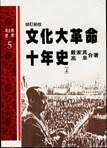
2026 marks the 60th anniversary of the outbreak of the Cultural Revolution in China, the 50th anniversary of its end, and also the 40th anniversary of the publication of the “Ten Years of the Cultural Revolution.” The book was also published in English and Japanese editions. This edition, reprinted in 2026, does not alter the views or content of the previous version, retains the original text and writing style, and only supplements to some events during the Cultural Revolution. To this end, the author analyzes and presents the new understanding of the ‘Cultural Revolution’ accumulated over forty years in this preface while supplementing and supplementing the previous edition.
“Natural Forces” and “Human Forces”
In the twenty-first century, humanity’s gaze often extends beyond Earth, and in the vast universe, we now only know that life exists on Earth. Humans are part of nature, and fundamentally, human behavior is also part of natural behavior. On Earth, besides “natural forces,” “human forces” are also at work. The nuclear fission chain reaction releases enormous energy; it is a “natural force,” while nuclear power generation is “human power” to exert its effect. A robot is a messenger body, and robot behavior can have a purpose, but this purpose is intentionally input from outside into the robot. Human behavior can be divided into two main parts: one is human behavior, which refers to intentional or inactive actions; Second, human natural behaviors, such as fleeing disasters. When a person knowingly knows disaster is coming and can avoid it but intentionally refrains from acting, it is not a natural action but a human act. The massive spontaneous behavior generated by animals or human groups is all “natural forces,” the most powerful force in the universe, and humans can only control them to a limited extent. Until today, financial storms have been natural behaviors triggered by natural forces, and the development of artificial intelligence can control financial storms to make them human behavior.
The Cultural Revolution taught me that major events in human history are not ‘created by the masses,’ but by one or a few individuals. Broadly speaking, “creation” includes “regression,” so major trends in human history can be predicted using AI like weather forecasting. Prediction also alters the course of history, which is called “feedback.” The Cultural Revolution was a miracle in human history; no ruler dared to stir up the hundreds of millions under his rule, driven by a fanatic “cult of personality” to declare war on local officials across the country, and Mao Zedong did just that. This is a populist movement controlled by those who hold supreme power in the party and state, relying on personal willpower; it is a kind of “artificial force.”
On January 8, 1976, Premier Zhou Enlai passed away, and a kind of uncontrollable ‘natural force’ emerged across China, different from the ‘man-made forces’ of the Ten Years of the Cultural Revolution. The Tiananmen Democratic Movement, which broke out nationwide in 1976 to mourn Zhou Enlai, was essentially a movement completely opposite to the spirit of the Cultural Revolution. However, under Mao Zedong’s personal will, the violent suppression of the Tiananmen Democratic Movement on April 5 was the result of “human forces,” and the suppression of the “April Fifth Movement” was an inseparable part of Mao Zedong’s Cultural Revolution.
Less than half a year after Mao Zedong violently suppressed the Tiananmen Movement, Mao Zedong passed away. In the late 1970s, from the arrest of Mao’s widow Jiang Qing to Deng Xiaoping’s rise to supreme power in China, the Cultural Revolution was gradually denied, and China underwent many changes. Yet, the massive portrait of Mao Zedong, the initiator of the Cultural Revolution, still hangs atop Beijing’s Tiananmen Gate Tower. The so-called “Mao Zedong Thought” and Mao Zedong-style personality cult have once again played out in China over the past decade. Sixty years after the Cultural Revolution, looking back on the past, we can see that on June 4, 1989, Deng Xiaoping’s violent suppression of the Second Tiananmen Democratic Movement was the result of Mao Zedong’s “lingering ghost” and “artificial power” effect.
Every century of human society has one or two major events that represent the spirit of the century. The fifteenth century was the Renaissance, the sixteenth century was the age of Discovery and the Reformation, and the seventeenth century was the age of the Scientific Revolution. The eighteenth century was the era of the energy revolution, and the nineteenth century was the century of the British Empire. The twentieth century saw two world wars and the rise and fall of communism, becoming a century of war and revolution. The fall of the Berlin Wall and the rise of the internet in the 1990s heralded a major shift in the spirit of the century; the twenty-first century is a great century of information revolution. Sixty years after the Cultural Revolution in China, in the era of information revolution and artificial intelligence, the analysis of major human historical events can be conducted from the perspective of the “broad behavioral science” of humans, nature, and artificial intelligence. Politics and economics are viewed as phenomena where ‘human forces’ and ‘natural forces’ intertwine in various ways, and these intertwining methods are related to different political and economic systems, ideologies, and religious beliefs. Analysis of the Cultural Revolution, including the Tiananmen Square incident, helps today better understand the differences between authoritarianism, democracy, freedom, and populism in human behavior.
While maintaining the original version’s viewpoints and textual content. As an author who experienced the Cultural Revolution and the two Tiananmen incidents, when publishing the new edition of “A Ten-Year History of the Cultural Revolution,” this article discusses the forms of court politics in contemporary China and the impact of two forces during the Cultural Revolution—”natural forces” and “human forces”—on China’s future.
The program of the Cultural Revolution
The Mao Zedong era still retained the characteristics of traditional Chinese autocracy: the emperor was far away, and the oppression suffered by the people came directly from local bureaucrats. University students, middle school students, young and middle-aged teachers, and almost all young people who grew up during Mao’s era encountered a political movement they had never imagined or witnessed; many were not thrown into it, but were drawn in. From Beijing to all over the country, when the ruling factions were exposed and criticized, they couldn’t figure out what was happening in China. Even Liu Shaoqi, as the president, faced the Cultural Revolution storm and could only say, ‘The old revolution has encountered new problems.’
After Mao Zedong took control of mainland China in 1949, he began serving as president for five years starting with the establishment of the position of state president in 1954. Starting in April 1959, Liu Shaoqi took the position. According to the constitution, the President of the People’s Republic of China is merely the head of state who does not hold real power; real power is held by Mao Zedong, the supreme leader of the Communist Party, who is not stipulated in the constitution. Before the start of the Cultural Revolution in 1966, a faction centered on Liu Shaoqi formed within the Chinese Communist Party that was inconsistent with Mao Zedong’s political views.
Mao Zedong’s purpose in launching the Cultural Revolution was very clear: to eliminate Liu Shaoqi and a large number of powerful party figures. In 1966, it was completely impossible for him to achieve this by convening a plenary session of the Central Committee; the longer it dragged on, the greater Liu Shaoqi’s influence became. Mao Zedong wrote the following passage in the “May 16 Notice,” clearly expressing his thoughts: “The bourgeois representatives who have infiltrated the Party, government, army, and various cultural circles are a group of counter-revolutionary revisionists. Once the time is right, they will seize power and shift from proletarian dictatorship to bourgeois dictatorship. The “Sixteen Articles,” published more than two months after the May 16 Notice, expressed this program in more concise language: this is the “reorganization of the party’s ruling faction following the capitalist path.” Although the nationwide shocking “Nine. The “January 3th Incident” continued to be implemented throughout the ten years of the Cultural Revolution until Mao Zedong passed away in 1976. As a result of implementing this program, the Cultural Revolution brought about four major changes in China: First, the establishment of Mao Zedong’s personal dictatorship and the lifelong system of supreme power, restoring China’s traditional autocratic system in a new form; Second, all capitalist elements and seeds on Chinese soil were eliminated, establishing a planned economy with closed-door self-defense and absolute public ownership of the means of production; Third, the people’s rights are almost completely stripped away; Fourth, China’s economy is on the verge of collapse.
“Court Politics” and “Revolutionary Rebellion”
The Cultural Revolution was a phenomenon that frequently occurred in China’s dynastic politics spanning thousands of years and strengthened imperial power. China’s dynastic political traditions are deeply rooted. The Xinhai Revolution in 1911 overthrew the Qing dynasty, and the Republic of China, established on January 1, 1912, began replacing the traditional monarchic autocracy with a fragile republic. After 1949, in mainland China, after the ‘Republic of China’ was replaced by the ‘People’s Republic of China,’ traditional dynastic politics existed as a ‘one-party Communist Party dictatorship.’
Everything Mao Zedong did during the Cultural Revolution was to fundamentally destroy the “People’s Republic,” which still bore some “republican” flavors in 1949, replacing laws with “supreme directives,” and becoming the monarch or emperor of the “Red Dynasty.” Mao Zedong’s Cultural Revolution was essentially a large-scale operation to fundamentally abolish the republic, rely on the people, purge political enemies, and strengthen imperial power.
The hallmark of court politics is that power is concentrated within the royal family. In China, under the Communist Party’s one-party rule, power is concentrated in the hands of Mao Zedong and a few members of the Communist Party Politburo. There are no unshakable rules for the transfer of supreme power, and factional struggles are frequent for supreme power. On Mao Zedong’s path to supreme power, Liu Shaoqi’s relationship with Mao played an important role. Liu Shaoqi had been a supporter of Mao Zedong since the 1930s. In the late 1950s, Mao Zedong launched the Great Leap Forward and the People’s Commune, causing a nationwide famine. Liu Shaoqi publicly criticized it as “30% natural disaster, 70% man-made.” After serving as ‘State Chairman’ for one term, Mao Zedong handed over the title to Liu Shaoqi. During the time Liu Shaoqi and Deng Xiaoping jointly presided over the work, Liu Shaoqi’s influence grew steadily. Since 1962, Mao Zedong suspected Liu Shaoqi of threatening his highest leadership position. In the past, Mao Zedong did not travel abroad without his wife Jiang Qing. When Jiang Qing saw Liu Shaoqi’s wife Wang Guangmei traveling abroad wearing a necklace and qipao that Chinese women at the time did not wear, it sparked intense jealousy among Jiang Qing, who was a former film actress. Lin Biao’s expansion of power in the military led by Lin Biao; conflicts between Lin Biao’s wife Ye Qun and Lu Dingyi’s wife Yan Weibing while shopping at a store when they did not know each other; Yang Shangkun installing a “bug” on Mao Zedong. These incidents all became the result of Mao Zedong and Jiang Qing’s determination to eliminate Liu Shaoqi’s supporters, the “Peng Luo Luo Yang anti-Party faction.” “Psychological reasons.”
In China’s old autocratic system, to strengthen imperial power, it was necessary to purge the meritorious officials and veteran generals who held real power from the palace. To purge the ruling faction such as Politburo and Central Committee members, for the first time the hidden palace politics were turned into a “revolutionary rebellion” visible to the public, purging dissenting forces from the ruling faction. Many those in power were tyrannical and oppressive before the Cultural Revolution, and their criticism of their exposure gave some of the people’s ‘revolutionary rebellion’ during the Cultural Revolution its inherent legitimacy. Unfortunately, these revolutionary rebels who followed Mao Zedong Thought suffered even more severe persecution during the late Cultural Revolution campaign to investigate the “May 16 Counterrevolutionary Group.” Sun Pengyi, an aide to Nie Yuanzi at Peking University, was both a promoter and a victim of the Cultural Revolution. The only reason Sun Pengyi was completely overthrown after the Cultural Revolution was that in 1966, he published a big-character poster titled “Deng Xiaoping Is a Capitalist Path in Power.” After the Cultural Revolution, Deng Xiaoping entered the era of ‘enlightened autocracy.’ However, Deng Xiaoping did not hold Mao Zedong responsible for initiating the Cultural Revolution. Instead, he feared a recurrence of the revolution. Starting with the 1979 Beijing ‘Xidan Democracy Wall Movement,’ while ‘anti-liberalization,’ he also paid attention to the resurgence of rebels who responded to Mao’s call during the Cultural Revolution.
The two Tiananmen incidents
In contemporary Chinese history, there have been two Tiananmen Square incidents that shocked the world: the first in 1976 in mourning Zhou Enlai, and the second in 1989 in mourning Hu Yaobang. These two Tiananmen Square incidents were both spontaneous mourning movements by the people and large-scale democratic movements, bearing no resemblance in nature to Mao Zedong’s Cultural Revolution. The direct consequence of the first retrial of the Tiananmen Square incident led to Hua Guofeng’s resignation and Deng Xiaoping’s emergence as China’s de facto top leader. After the second Tiananmen Incident broke out in 1989, Deng Xiaoping could not see the same drama as the two incidents and fearfully believed: “The Cultural Revolution is coming again.” Deng Xiaoping mobilized hundreds of thousands of troops into Beijing, single-handedly orchestrating the world-shocking ‘June Fourth Tragedy.’
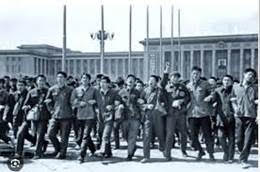
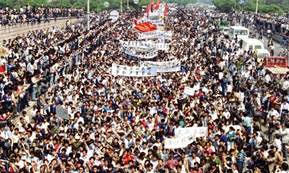
In both Tiananmen incidents, the Chinese government suppressed the peaceful protests attended by hundreds or even millions of people as “counter-revolutionary riots.” Many people have long worked to restore the truth about the two Tiananmen incidents. After the first Tiananmen Incident was suppressed, I wrote my notes into ‘A Chronicle of the April Fifth Movement.’ In August 1978, during the discussion on the ‘Standard of Truth,’ I spoke at the National Symposium on the ‘Standard of Truth’ organized by the Institute of Philosophy of the Chinese Academy of Social Sciences, using the format of a ‘philosophical fantasy novel’ titled ‘The Court of Religion, the Court of Reason, and the Court of Practice.’ With the help of Ma Peiwen of the ‘Guangming Daily,’ I revised it into a nearly 20,000-word article. On September 14, I published this long article covering the Tiananmen Incident in three pages at once, through a ‘cross-era journey.’ I visited the “religious court” of 17th-century Italy that tried Galileo, the “rational court” of the 18th-century French Enlightenment, and the future Chinese approach of the “practical court,” fully affirming the Tiananmen Square movement that occurred in Beijing in 1976. Two months later, on November 14, the Politburo Standing Committee of the CPC Central Committee announced the “rehabilitation” of the April and Fifth Tiananmen Square incidents.
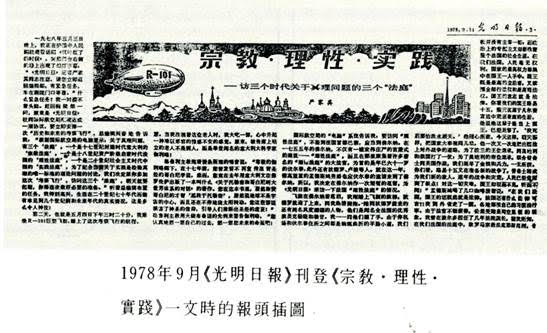
In the context of Jiang Qing’s downfall and Hua Guofeng’s era, although the Tiananmen Incident has not been reversed, fantasy novels about “practical courts” and “cross-era flight” remain unobstructed. After the publication of “Three Courts,” I wrote a second “fantasy novel,” interviewing the “autocratic regime” of France’s Louis XIV era, the “constitutional regime” after the “Glorious Revolution” in Britain, and the “social republic” of 21st-century America. It was serialized and published in the inaugural issue of Beijing’s New Era magazine in 1979. The article was titled “Three Types of Government—An Investigation into Autocratic, Constitutional, and Republican Governments.” In April 1979, People’s Publishing House published “A Record of the April Fifth Movement,” a collaboration between me and Liu Changlin, Li Huiguo, and Luan Wenhua from the Academy of Social Sciences.
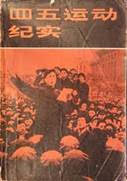
The two “Tiananmen Incidents” in 1976 and 1989 both consisted of three main parts: first, the Tiananmen Democratic Movement, which was primarily triggered by “natural forces.” The first was a democratic movement widely participated by Beijing citizens; the second was a larger, nationwide democratic movement led by university students in Beijing and involving workers, intellectuals, and citizens; Second, the palace politics within Zhongnanhai, which resembled the traditions of Chinese dynasties; Third, the violent suppression of peaceful protests by unarmed civilians, such as the violent clearances of the April 5th Incident in 1976 and the Tiananmen Square Massacre in 1989, which were purely events caused by “human forces.” For thirty-six years, the Tiananmen mother has been in endless pain. The brutal scenes of the June 4th massacre, broadcast live on television worldwide, directly triggered changes in Eastern Europe. Almost every country in the world has successively issued statements strongly condemning the CCP authorities’ atrocities in June 4th; Chinese students from various countries took to the streets to protest against the Beijing government; University students in Beijing and across the country launched the “Empty School” movement, risking their lives to lie on the tracks to intercept trains, aiming to make urban and rural people across the country understand the truth of the incident and resist the government’s atrocities against the people; A large number of CCP members at home and abroad publicly announced their resignation.
June 4th was a turning point in twentieth-century world history. Without June Fourth, the Berlin Wall would not have collapsed just five months after the incident. The ‘June Fourth shockwave’ formed a ‘global political whirlwind’ at the end of the twentieth century, triggered by ‘natural forces.’ Faced with the fleeing crowds, the governments of Hungary and East Germany dared not shoot or kill the fugitives again. Three months after June 4th, Hungary opened its western border, and over ten thousand East Germans escaped to West Germany via Hungary and Austria within two days. On November 9, 1989, the Berlin Wall collapsed under the impact of ‘natural forces,’ and within two days, 750,000 East Germans flooded into West Germany. The fall of the Berlin Wall marked a turning point in twentieth-century world history.
The global upheaval triggered by June Fourth is a result of ‘natural forces,’ manifesting differently in different regions and countries. In Eastern Europe of the Soviet Union, this led to the collapse of ‘one-party rule’ and the dissolution of the Soviet Union. Before the global tide, driven by the global “capitalist tide,” Deng Xiaoping used his personal “human power” to save the Communist regime, abandoning the “socialist planned economy,” and leading China onto the path of partial “capitalism” under Communist Party dictatorship. Deng Xiaoping’s historical role was to continue Mao Zedong’s autocratic stance and also serve as the “gravedigger” of communism.
The common roots of the Cultural Revolution and June 4th
In the past half-century, those who held power nationwide, provincial, and municipal power during the Cultural Revolution have left this world one by one. The ‘Red Guards’ and ‘Red Little Soldiers’ from the Cultural Revolution are now in their seventies or eighties. After the Cultural Revolution ended, Deng Xiaoping seized supreme power and launched a large-scale campaign to criticize and deny the Cultural Revolution, sending Mao Zedong’s wife Jiang Qing, Wang Hongwen, the powerful Vice Chairman of the CPC Central Committee, as well as Zhang Chunqiao and Yao Wenyuan to prison.
Sixty years after the outbreak of the Cultural Revolution, looking back at the revolution, one can see the profound impact of the Lin Biao incident in 1971 and Lin Biao’s son, Lin Liguo, on China. Lin Biao was the initiator of the ‘cult of personality.’ After Lin Biao’s position in Mao Zedong’s mind was shaken, Lin Biao’s son Lin Liguo took the opposite approach. On March 23, 1971, Lin Liguo, Zhou Yuchi, Yu Xinye, and others drafted the ‘Minutes of the 571 Project.’ ‘571’ is a homophone for ‘armed uprising,’ and it was a military coup plan aimed at overthrowing Mao Zedong’s rule. The article directly targeted Mao Zedong, calling him a ‘feudal tyrant.’ According to the Summary, Lin Liguo and others devised eight methods to kill Mao Zedong, including blowing up trains or railway bridges, using flamethrowers, and directly assassinating Mao with a pistol. In the early morning of September 13, 1971, Lin Biao, the “Deputy Commander” of the Cultural Revolution and Mao Zedong’s successor, fled abroad and died in a plane crash in Mongolia. At that time, Mao Zedong decided to widely spread the Lin Biao incident and the “Summary” to the entire nation. Contrary to Mao’s wishes, the widespread dissemination of the “May 71 Project Summary” became an unprecedented “ideological liberation movement” nationwide to understand China’s autocratic politics. The first large-scale Tiananmen Movement erupted during Qingming Festival in 1976. In reality, it was Beijing students and citizens, influenced by the “Minutes of the ‘May 71 Project’,” and, under the pretext of commemorating Zhou Enlai and driven by “natural forces,” opposed Mao Zedong.
Mao Zedong published the “Minutes of the 571 Project” to explain the reasons for Lin Biao’s “betrayal” of him. The fact is, Mao Zedong and Lin Biao were always connected; without Lin Biao’s advocacy of his “cult of personality” throughout China, Mao Zedong would not have held the status of “great leader, great mentor, great commander, great helmsman” (Vol. 1, p.85). Lin Biao’s death made Mao Zedong realize the mistakes of the “Cultural Revolution.” He proposed “stability and unity” and “improving the national economy.” In early 1975, Mao Zedong reinstated Deng Xiaoping as Vice Chairman of the Party Central Committee, Politburo Standing Committee, Vice Chairman of the Central Military Commission, and Chief of the General Staff. Deng Xiaoping’s return to office and his leadership of the State Council greatly improved China’s economy. In November, Mao Zedong hoped that, under Deng Xiaoping’s leadership, a resolution acknowledging the Cultural Revolution’s “three parts errors and seven parts achievements” would be passed, but Deng Xiaoping did not accept it. Thus, a campaign titled “Criticizing Deng and Counterattacking the Rightist Trend of Reopening Cases” began.
Mao Zedong’s top priority in governing China was to firmly control the entire nation’s military. Professor Ding Shu of Normandale College in the United States said: “China’s Cultural Revolution began with ‘preventing counter-revolutionary coups’ and ended with the Zhongnanhai ‘palace coup.’ Ye Jianying was involved from beginning to end and played an irreplaceable role.” 1. After Minister of National Defense Peng Dehuai and Chief of General Staff Huang Kecheng were dismissed in 1959, Lin Biao took control of the military. Due to Lin Biao’s long-term illness, He Long and Luo Ruiqing gradually gained real control of the military. On the eve of the Cultural Revolution, Mao Zedong dismissed Luo Ruiqing from all military posts under the pretext of eliminating the ‘Peng, Luo, Lu, Yang’ anti-Party group. In early January 1966, Mao appointed Ye Jianying as Vice Chairman of the Central Military Commission and as Secretary of the Secretariat and Secret Department of the Central Military Commission, both positions previously held by Luo Ruiqing. At the beginning of the Cultural Revolution, while Mao Zedong was campaigning to overthrow Liu Shaoqi, he also removed He Long from his position as Second Vice Chairman of the Military Commission. In 1976, after Zhou Enlai’s death, the first Tiananmen mass movement broke out around the Qingming Festival in April. This movement was a protest against the ‘Wang, Zhang, Jiang, and Yao’ gang of four who held power during the Cultural Revolution. Nearly half a year later, Mao Zedong passed away. Less than a month after Mao Zedong’s death, Hua Guofeng and Wang Dongxing, with the support of Ye Jianying, launched a palace coup, arrested ‘Wang, Zhang, Jiang, and Yao’ and imprisoned them. The ten-year-long Cultural Revolution was declared over.
After Mao Zedong’s death, Hua Guofeng held the highest authority in the party, government, and military for only two short years. After the first Tiananmen Square overturning in 1978, Deng Xiaoping relied on Ye Jianying’s help and support to seize China’s highest power from Hua Guofeng. These are mainly the results of ‘human forces’ at work.
After Deng Xiaoping ended the Cultural Revolution, he denied it, which was a “partial de-Maoization” movement. Because the “non-Mao” was neither comprehensive nor thorough, the lingering shadow of Mao’s Cultural Revolution and autocratic dictatorship lingered. Deng Xiaoping himself, after seizing China’s highest power, faced with the much larger Second Tiananmen Movement, using even more brutal repression methods than in 1976, using machine guns and tanks to kill thousands of unarmed students and citizens. Forty years after the Cultural Revolution, the “Red Guards” and “Red Little Soldiers” from the Cultural Revolution period still alive, represented by Xi Jinping, after seizing national power, adopted Mao Zedong’s “autocratic dictatorship” tactics, promoted a cult of personality, brought Mao-era methods back onto the political stage, fundamentally rejected the Xinhai Revolution’s ideal and practice of “overthrowing the dynasty and establishing a republic,” rejected the reform and opening up of the 1980s, and abolished the 1982 constitution under Deng Xiaoping’s rule that the President and Premier could not serve more than two consecutive terms This regulation marks a major political regression from the Mao Zedong era, and a major regression toward the thousand-year-old ‘imperial autocratic politics.’ Half a century after the end of the Cultural Revolution in 2026, China has emerged an increasingly powerful “natural force” to halt the “Great Regression.” The great transformation following the second Tiananmen Square incident is approaching, and it is foreseeable that the 1930s will be a new era of great transformation, development, and prosperity for China.
Comprehensively advancing China’s “non-Maoization”
History is an indelible memory; historical truth cannot be concealed, and all hidden historical truths will be restored. A case known worldwide for the 1989 Tiananmen Square Massacre in China has yet to be recovered in China after 36 years, because the root of the Cultural Revolution and June Fourth is the common root, and because Deng Xiaoping, when denying the Cultural Revolution, did not point out that Mao Zedong was the mastermind behind Lin Biao and the “Wang Zhang, Jiang Yao,” and “Wang Zhang, Jiang Yao.”
The entire sixty years of Chinese history since the Cultural Revolution have proven that as long as Mao Zedong Thought governs China both nominally and in practice, China’s autocratic politics will not disappear, and China will not have democratic politics. On December 24, 1993, the day before the centenary of Mao Zedong’s birth, my article ‘Plan to Renovate Tiananmen Square’ was published in the Paris European Daily, which stated: “In twentieth-century Chinese history, Mao Zedong’s influence is second only to Sun Yat-sen. Sun Yat-sen overthrew the feudal monarchy of the Qing dynasty and established the Republic of China, while Mao Zedong established a “new imperial system” in mainland China under the name of the “People’s Republic.” China today is facing a tremendous transformation, centered on “comprehensive de-Maoization,” transforming the “one-party dictatorship” mainland China into a free and democratic mainland, and achieving peaceful reunification based on freedom, democracy, and regional diversity. During this transformation, to eliminate the influence of Mao Zedong’s authoritarianism, Tiananmen Square underwent a major transformation. How to transform Tiananmen Square requires urban design and planning experts to decide scientifically and by listening to diverse opinions. The above article is provided only for expert reference. Before and after the renovation of Tiananmen Square, it was necessary to comprehensively revise and rewrite both modern and contemporary Chinese history based on historical truth. The future of China will usher in a new era of intellectual liberation.
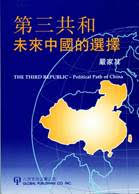
The two major cycles of Chinese history and the insights from France’s ‘First Republic’ to the ‘Fifth Republic’ for China
On September 14 and 15, 1989, France’s Le Europa and the American ‘World Journal’ published my article ‘How to View Twentieth-Century Chinese History’: ‘For a long time, we have argued too much about certain names and symbols when looking at Chinese history.’ France did not, like the Chinese, create different names for different ‘countries’ such as ‘Republic of France’ or ‘French People’s Republic.’ After the First Republic, Yuan Shikai, along with the Beiyang warlords, the Kuomintang, and the Communist Party, successively seized power through violence and war. Each regime set aside the principles of republicanism and established warlord or 'one-party dictatorship' autocratic politics.
There have been two major cycles in Chinese history—one is the dynastic cycle, and the other is the cycle of unification and division. Mao Zedong was the Qin Shi Huang of 20th-century China. Like Qin Shi Huang, he played an important role in maintaining the unity of mainland China in the 20th century. Mao did not recognize the legitimacy of Russia’s occupation of northern Chinese territory. Mao Zedong was also a bold and unrestrained Chinese poet. “De-Maoization” is not meant to use government power to interfere with people’s freedom of belief; everyone has the right to express their views on Mao Zedong. “De-Maoization” means removing the ideology and politics of China’s “imperial power worship,” and removing the symbol of “imperial power worship” from Tiananmen Square. The Xinhai Revolution established the Republic of China in China, which was China’s ‘First Republic.’ After 1949, mainland China was a nominal republic but a “Second Republic” filled with imperial characteristics. The development of “de-Maoization” would inevitably lead China into a new era of peaceful democracy, political modernization, and great economic development—the “Third Republic” era. 3. In the process of restoring the truth about June 4th, we have comprehensively promoted China’s ‘de-Maoization.’ For China, the Republic of China remains the First Republic, still exists in Taiwan, and has embarked on the path of freedom, democracy, and great development. The People’s Republic of 1949 was like the French Louis· Just like in Bonaparte’s era, it became the Chinese empire of the twentieth century. Deng Xiaoping’s 1982 constitution only dressed the so-called ‘People’s Republic’ in the ‘guise of a republic’; Now he has shed the “republican coat” and donned the “emperor’s new clothes.” China’s future is to establish a democratic and free ‘Third Republic’; On the basis of the coexistence of the “First Republic” and the “Third Republic,” voluntary and mutually beneficial development, and through peaceful means and without a timetable, establish a free and democratic “Federal China.” “Federal China” will eliminate the two major cycles of Chinese history—the dynastic cycle and the cycle of unification and division. “Federal China” is the China of the “Fourth Republic.”
Human history has gone through twenty centuries of the Mediterranean era and five centuries of the Atlantic era. In the future era of “Federated China,” the world is transitioning from the Atlantic era to the Indo-Pacific era. The two Pacific powers, China and the US, along with the European federation, will become the backbone of global peace and democracy. China’s future is bright and bright. After the Indo-Pacific era, humanity will enter the ‘Great Space Age.’