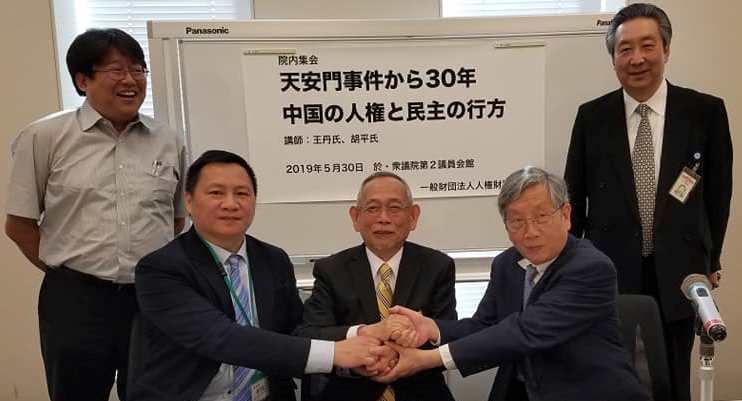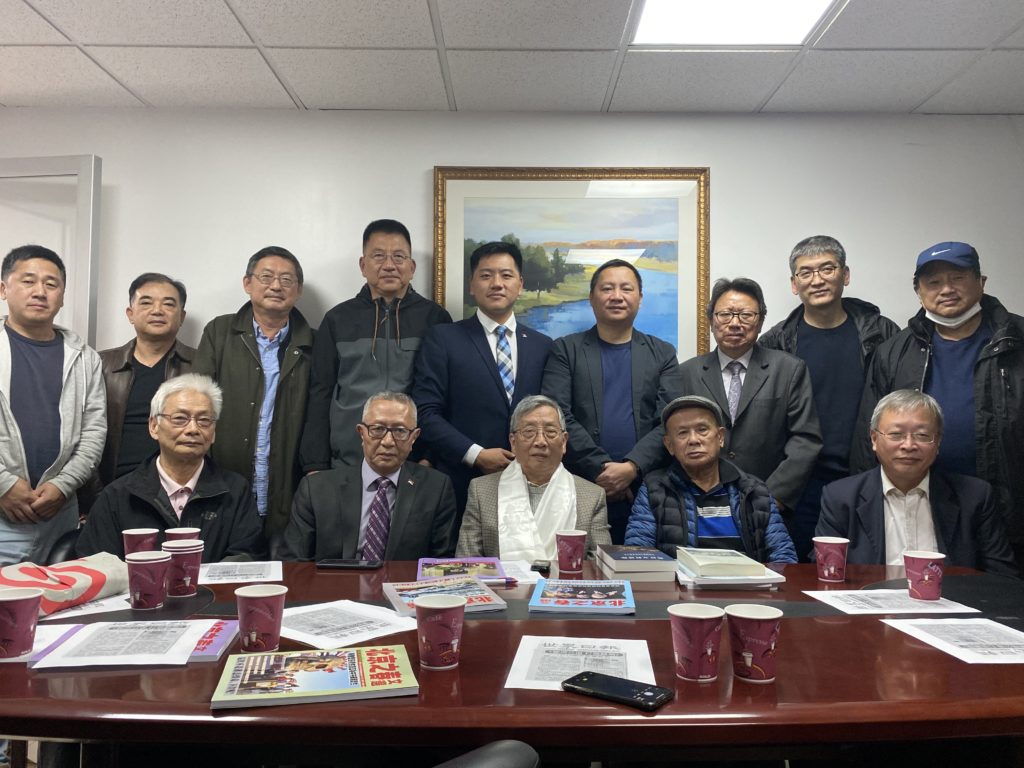
On November 13, renowned political theorist and honorary editor-in-chief of “Beijing Spring” Hu Ping held a new book launch and discussion meeting in New York to announce his new work, “To Achieve Justice, Flip the Table—China’s National Issues and Democratic Transition.” The press conference was jointly organized by “Dialogue with China” and “Beijing Spring,” with many democrats, scholars, experts, and Tibetan representatives attending Hu Ping’s new book launch to share their views on the new book and China’s ethnic issues.
At the book launch, Hu Ping explained his stance on ethnic issues. “Flip the Flip” means that Han Chinese must empathize, put themselves in others’ shoes, and empathize with others’ feelings and feelings; only on this basis can they find the correct path and direction for handling ethnic issues.
In this work, Hu Ping explains the origins, history, and current situation of China’s ethnic issues. While clarifying the true history of so-called “ethnic minorities” such as Tibet, Xinjiang, Mongolia, as well as Hong Kong and Taiwan and mainland China, he also puts forward a profound viewpoint: the Chinese government (CCP) oppression of these ethnic groups is not a kind of “ethnic” oppression often misinterpreted by these oppressed ethnic groups as “Han Chinese” against them, but rather, “under CCP rule, all ethnic groups are equal— “All equal before tyranny.”
Hu Ping proposed that on the issues of “unification” and “independence,” “the freedom and happiness of the people are above all else” should be the standard, as well as “the issue of unification and independence is left to future democratic governments,” “democracy faces a dilemma in the struggle between unification and independence,” “ethnic self-determination versus resident self-determination,” and “federalism is the best compromise in the struggle between unification and independence.” He not only discussed long-standing major issues of concern to all ethnic groups theoretically but also put forward practical and feasible suggestions.
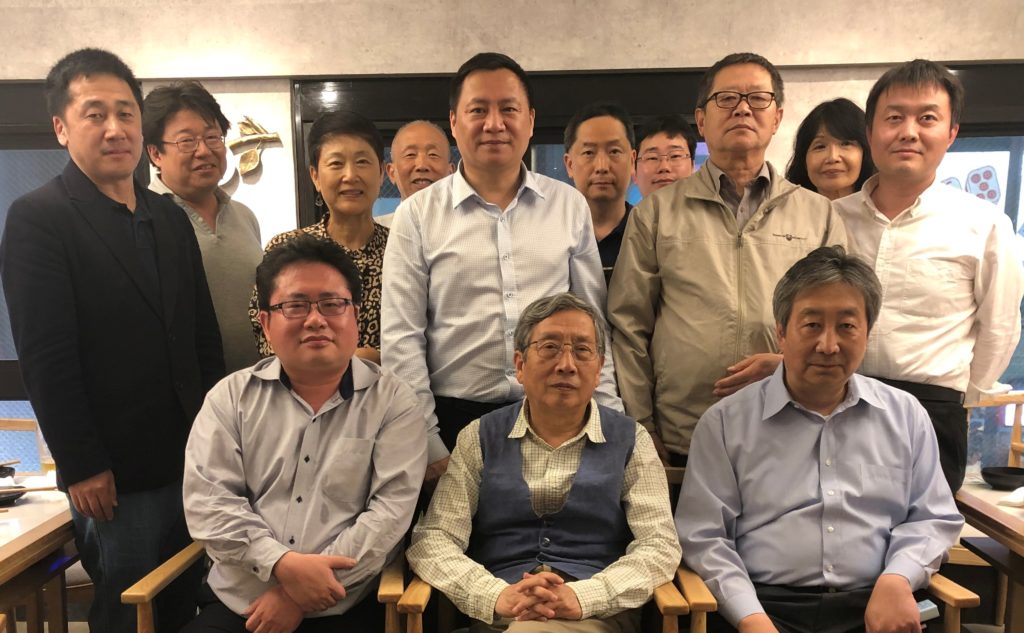
Wang Dan, the conference host and leader of the 1989 student movement, stated that the sixth book in the “China Series” of the “Dialogue China” think tank publishes Mr. Hu Ping’s book “To Get Justice, Flip the Table,” exploring China’s national issues and democratic transition. “Hu Ping’s book is very important,” “because China’s future democratic transformation will face a very big problem: how to handle the problems surrounding China, namely ethnic issues.” ”
Wang Dan said this book is one of the “China Series” published by the “Dialogue China Think Tank” established in 2018. The publication plan of this series aims to “review the past and envision the future,” not only listing the problems China will face in the future but also proposing solutions and rules for solving them. Wang Dan previously urged Hu Ping to write down his years of reflections in this field.
Gong Ga Zhaxi, former head of Chinese affairs at the Dalai Lama’s North America office, congratulated the new book on its publication and thanked Hu Ping for telling Tibetan history and voices as a Han Chinese, which will have a positive impact on Han Chinese understanding of the truth about Tibet.
Gonggazhashi said, “Now the CCP is controlling Tibet in a new way…… That is, using technological methods and some ‘legal system’ to control Tibet. Therefore, Han Chinese in Tibet, especially those who came from mainland China, hardly understand Tibet; they know exactly the same tactics long brainwashed and propagandized by the CCP. ”
Gong Ga Zhaxi said, “Such a book coming out at this time,” written by “a Han Chinese scholar and a senior figure in the pro-democracy movement,” and by someone who had gained a genuine understanding of Tibet in American free society, “will definitely have a positive impact on the Han people,” and “is of great significance.”
Mr. Cicheng Gyatso, Liaison Officer for Chinese Affairs at the Central Tibetan Administration’s North American Office, emphasized in his speech that Mr. Hu Ping is a loyal friend of the Tibetan people. He also pointed out that the Tibet issue discussed by Mr. Hu Ping in this new book, as well as the “Middle Way” policy proposed by His Holiness the Dalai Lama to seek genuine autonomy for the Tibetan people, are issues and suggestions that current Chinese leaders need to hear. Finally, Mr. Cicheng Gyatso presented a “khata” to Mr. Hu Ping, thanking him for mentioning the Tibetan issue in his new book and for his long-term support for Tibet’s freedom cause.
Chen Pokong mentioned Hu Ping’s early work—On Freedom of Speech—and admired Hu Ping’s decades of steadfastness in opposing CCP tyranny and pursuing freedom and democracy. He called Hu Ping’s new book a “precious document.”
Chen Pokong said: He was not very familiar with ethnic issues at home, but after going abroad, he realized this issue is actually a matter of universal values and a democratic movement. We can’t help but worry about all those persecuted by the CCP—not just Han Chinese, not just ethnic minorities, but the Communist Party persecutes everyone: Tibetans, Uyghurs, Mongols, Falun Gong practitioners, pro-democracy activists, rights lawyers, all believers.
Chen Pokong said: “When our Chinese nation is at its backbone, among the pro-democracy activists, we need someone like Hu Ping who steadfastly holds his position, integrity, and ideals.” He said that Hu Ping, who has held fast to his beliefs for forty years, is a “landmark figure of the democracy movement” and “a heroic figure in history,” much like the modern Chinese thinker Hu Shi. Although the pro-democracy movement is small and weak, “our voice is very tenacious…… We are doing this for our nation, for the suffering …… Everyone steadied themselves. ”
Xue Wei pointed out that the so-called “nationalism” under the CCP is hypocritical, limited to “protesting at the U.S. embassy after hearing about the U.S. bombing of the Yugoslav embassy,” and then “lining up at the U.S. embassy to apply for a visa,” but in essence, it is all “interests above all.” “Are Chinese people really ‘patriotic’? So, is it ‘nationalism’? “He asked, then why do the children of high-ranking officials immigrate to the U.S.?” I think it’s all about profit first. ”
Xue Wei said: “Human rights are above sovereignty,” “Where there is freedom, that is my motherland,” “Ethnic issues are like marriage: marriage requires consent from two people; “Divorce is all you need for one person to divorce.” He firmly supports the “right of residents to self-determination.”
At the meeting, Wang Juntao stated that one of Hu Ping’s new books made a huge contribution: “It clearly raises questions.” “Raising questions and suggestions for the future Chinese democratic government is like defusing a bomb in advance.”
Wang Juntao said: “The issues (Hu Ping) sees and discusses are not the simple discussions of scholars and thinkers; many issues are for those who actually need to handle affairs. China’s problems need to be addressed, and this person must have influence and not fear criticism…… But Mr. Hu Ping suggested that he did not act like an ostrich. Even after China’s democratization, this national issue will not automatically disappear; it may become even more acute and face it more sharply.”
Otherpro-democracy activists also attended the book launch, including Li Jinjin, Zheng Xuguang, Yu Dahai, Liu Nianchun, Jin Yan, and others.