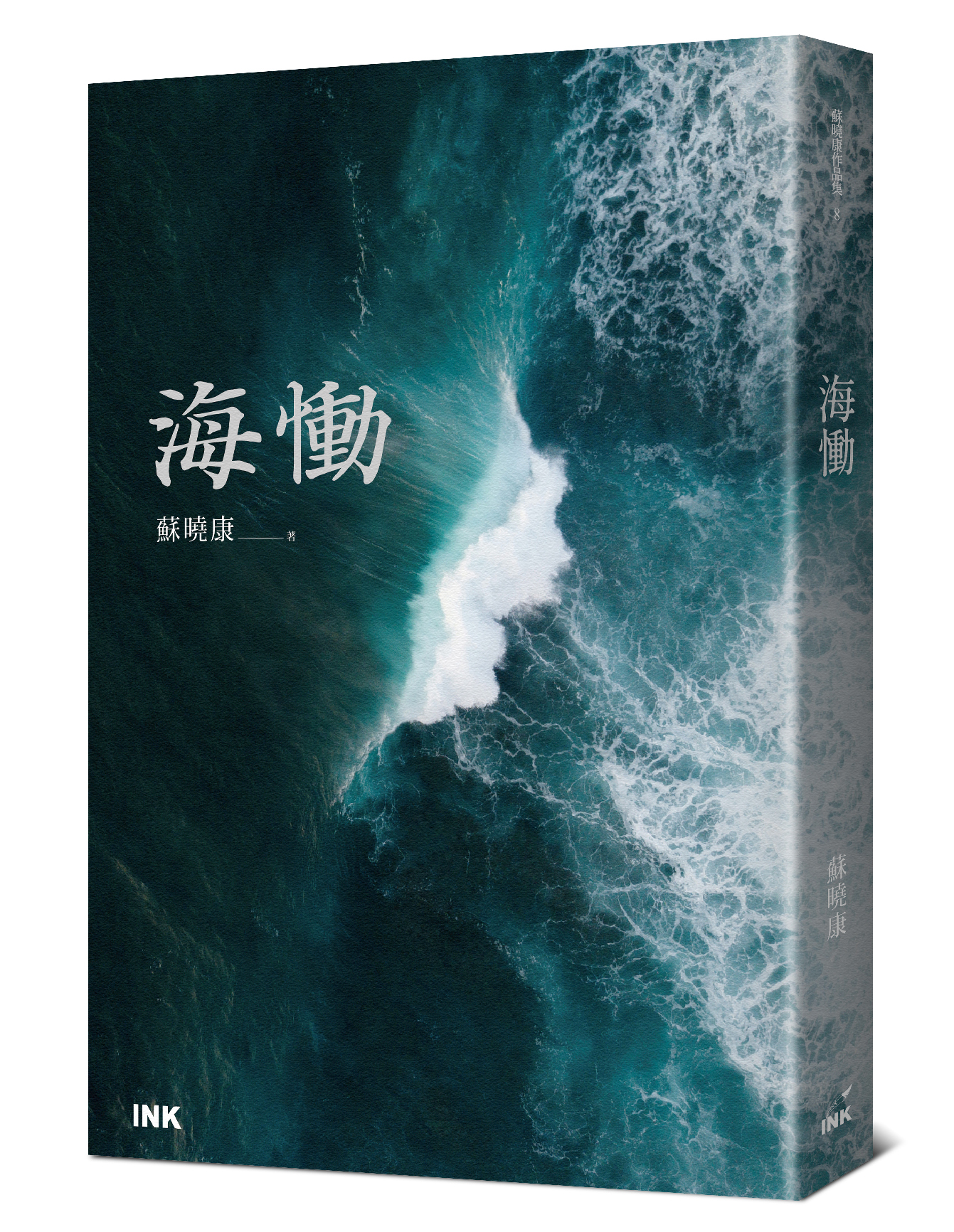
Su Xiaokang discussed the purpose of this book:
Three years ago, I wrote “Ghost Pushes the Mill,” reviewing “China’s Magical Thirty Years” (1989-2019) to interpret Deng Xiaoping’s phrase “keep a low profile”—his “economic salvation of the Party” after the June Fourth Massacre also played the Eastern conspiracy internationally, but the CCP won decisively. I have a description of this: during World War II, Roosevelt turned American manufacturing into a “global democratic arsenal.” Less than a century later, this scale All of it was taken by a communist regime in the East. Xi Jinping built on this foundation for the ‘rise of a great power,’ creating a bizarre system that combined digital Leninism with Shang Yang’s Qin system, moving from the Loess Plateau to the Pacific. Thus, a new interpretation awaits us: How has China gone to the sea over the past thirty years? This is the theme and narrative of my new book, ‘Sea of Grief.’ In my book, I once explained Deng Xiaoping’s strategy, which was essentially ‘crossing the river by feeling the stones’ back then, escalating to ‘crossing the sea by feeling the stones’—a highly blind move. Coupled with the inland limitations of Chinese civilization, it easily fooled Europe and America. So, for today’s world misery, the West bears half the responsibility itself.
Synopsis:
Su Xiaokang, winner of the Taipei Book Fair Grand Prize, has his latest masterpiece, ‘Sea of Sorrow.’
Only by solving the problem of dictatorship in China can the surroundings and the world be at peace!
In 1988, he made a name for himself across China with ‘River Sorrow,’ but was forced to leave for a distant place because of it
Thirty-five years later, the exile’s vision has long been extended above the deep blue sea
The ‘sea burial’ experience of the late Qing dynasty over a hundred years ago has escalated into ‘sea grief’ in the twenty-first century
This grief is not limited to China, but extends all the way to Russia
Just as the Russia-Ukraine war affects not only the continent but also global and Taiwan Strait security
In this era of upheaval, Taiwan, at the heart of the storm
,A world situation observation report gathered by exiles gathered through blood and tears
The Chinese nation was born on the Loess Plateau, and did not know what the ocean was. — Su Xiaokang
One word for sorrow speaks of the Yellow River, one word for grief speaks of the continent; The confrontation between land and sea extends all the way to Russia, with nationalism and unification, the isomorphism of China and Russia, Pu and Xi, and Ukraine and Taiwan sharing the same fate.
Inland-oriented China maintained the millennia-old Qin system, which was closed, conservative, and fearful of foreign threats. Facing the ocean, it suppressed Hong Kong, threatened Taiwan, occupied the Tibetan Plateau, and colonized Xinjiang in the Western Regions, demonstrating its consistent bullying geopolitics.
“Sea Lament” tells from Yan’an to Beijing, where scholars become monkeys and Huangmei opera superstars are cut open, inheriting the harsh rule of Shang Yang. The historical experience is inherited from ancient times to the present, with no blood relation between Xi and Mao, and the bloodthirst genetics are clearly discernible.
China, a ‘great power rising,’ remains a barbaric land in his writing. Hundreds of millions of children drowned, 500 million women remain tools for childbirth. What ‘progress’ has there been since the May Fourth Movement?
Today the world has fallen, while yesterday it was gentle and beautiful. The early Republic of China truly was a brilliant era filled with stars. “Grief means pain, weeping, sorrow, or awakening?” Is ‘barbaric and barbaric’ also a human reality? Overcome with grief, he compiled it into the book ‘The Grief of the Sea.’
Source: Su Xiaokang’s Facebook