Tian Mu (compiled and edited): July 29, 2023
The ‘Waterloo’ of China’s Reform and Opening Up — From Mourning Yan Mingfu to the End of That Era (Part 1).
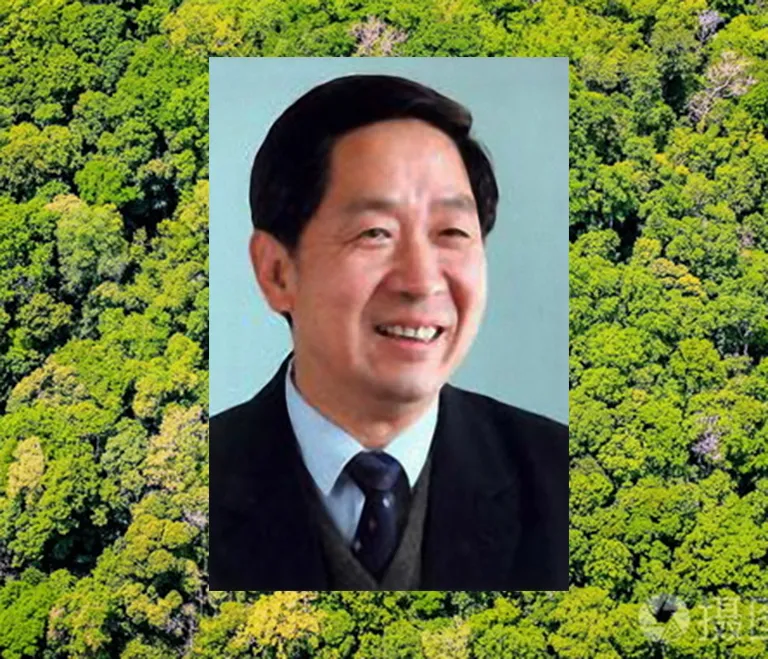
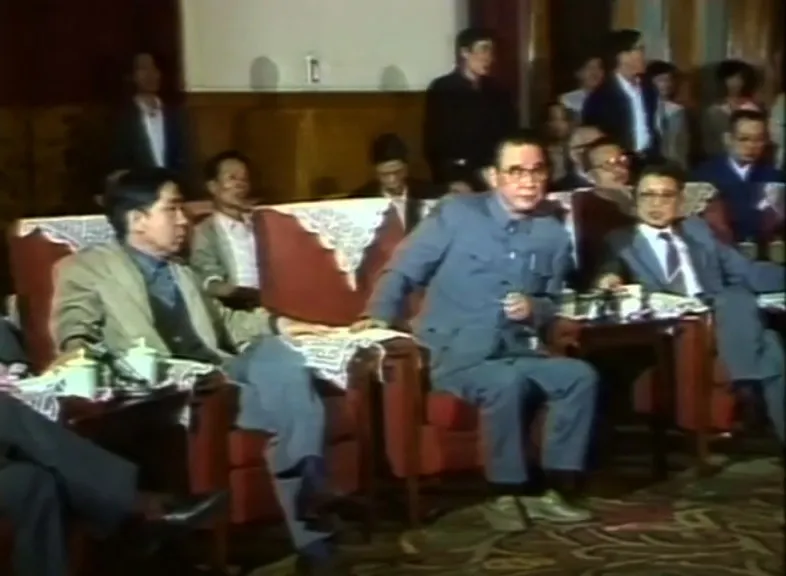
Mr. Yan Mingfu passed away on July 3rd at the age of ninety-two. He was a figure forgotten by the times, seemingly forgotten by society. Yan Mingfu was one of the moderate democratic figures in the top leadership of the Communist Party, having served as Secretary of the Secretariat of the CPC Central Committee and Minister of United Front Work Affairs. During the Tiananmen Square student movement in the 1989s, he faithfully implemented Zhao Ziyang’s policy of “resolving the student movement on the path of democracy and the rule of law.” After the June Fourth Incident, he was dismissed for allegedly “poor performance.” In 1991, Yan returned to public service as Vice Minister of Civil Affairs, and has since been engaged in charitable work.
There is a saying among the public: Yan Mingfu’s death marked the end of an era. At the same time, he awakened the world’s memories, and through Mr. Yan Mingfu, we can expand and extend our horizons. The wave of the ‘1989 pro-democracy movement’ that erupted that year was influenced by broader environmental factors (cultural, economic, ideological, news, political, and other aspects), involving changes across various fields and levels of the year. Because the superstructure could not keep up with the needs of economic development, it catalyzed and gave rise to a political movement throughout society.
Social revolution is a comprehensive movement of change, a democratic revolution. China has struggled for a century without success, and will continue on a long and arduous road. Reflecting on the past and present, using bronze as a mirror and people as a mirror, one can straighten one’s clothes and understand the rise and fall. It is important to remind the world that the review and reflection of the ‘1989 Democracy Movement’ should focus more on methods, direction, and scope, accumulating experience, strategies, and methods for the current constitutional democracy movement.
Voice of Europe organized a symposium commemorating Yan Mingfu, attended by Wan Runnan, Liao Tianqi, Marie Holzman, Tang Yuanjun, Wang Guanru, and the author. Below, we share our discussion and perspectives with readers.
A look back at China’s ‘Little Spring.’
Tian Mu: The passing of Mr. Yan Mingfu has caused quite a stir in society. A memorial service was held domestically on the 13th. Radio Free Asia reported: Several current and retired senior CCP leaders sent wreaths, including Hu Jintao, Zhu Rongji, Wen Jiabao, Li Ruihuan, Li Keqiang, Wang Qishan, Liu Yunshan, Wang Zhaoguo, Deng Pufang, Sun Chunlan, and Dai Bingguo, as well as Politburo Standing Committee member Cai Qi. According to renowned independent journalist Gao Yu on Twitter, “China’s top leader Xi Jinping also sent a wreath,” …….
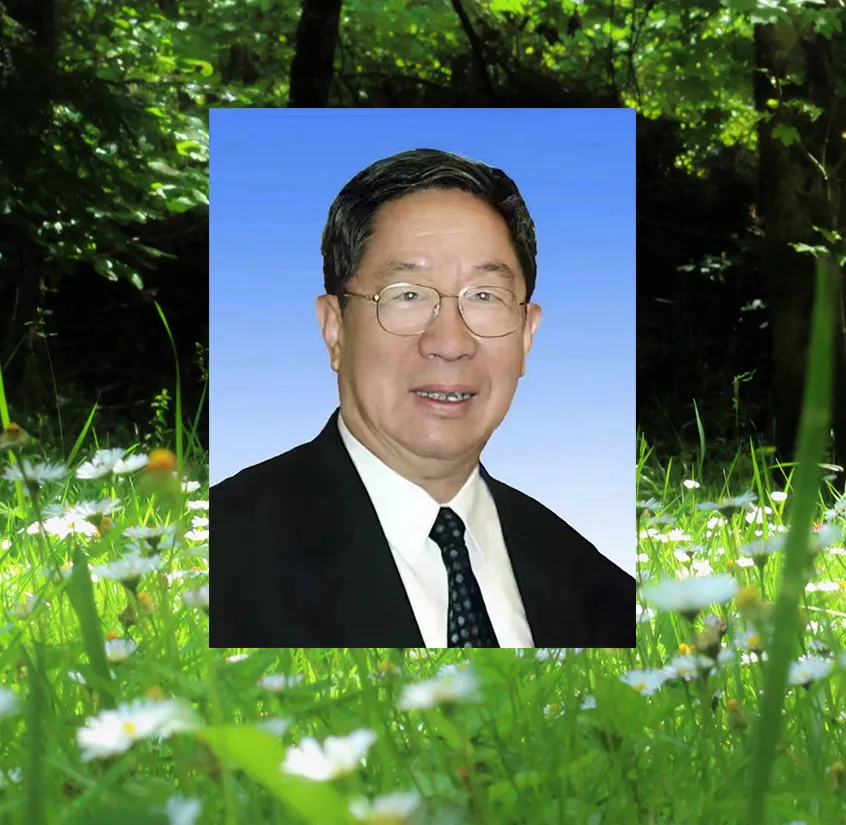
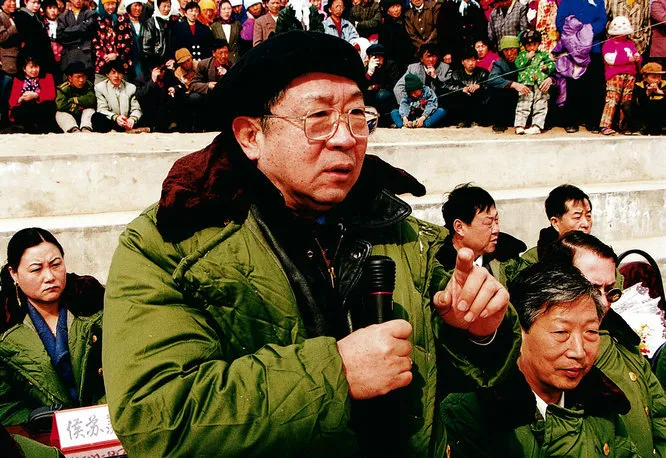 > Yan Mingfu /Official website of the China Charity Federation
During the ‘1989 Student Movement,’ Yan Mingfu earned the respect and affirmation of the Chinese people, especially the support and respect of pro-democracy activists. This also indirectly proved that the social movement was the will of the people, not only awakening Chinese society but also alerting some senior CCP officials. Regarding the ’89 Student Movement, my understanding at the time was that the old system that had been shackled was a need of the times, a call of modern political civilization, and a cry from the people who longed for and longed for genuine institutional reform.
I know Wan Runnan’s name and Sitong Company in the mid-1980s. Our company purchased printers from Shixin Sitong Company, replacing rotary mimeographs. China’s private enterprises have broken through the institutional models of state-owned and collective enterprises, no longer bound by planned economies, and have stepped onto the golden avenue of market economy. During the ’89 Student Movement,’ there were reports that Sitong Company delivered drinking water and food to students in the square, which I greatly admired. Wan Runnan was the “first” to try the crab, and he had deeper insights and insights into political reform than others.
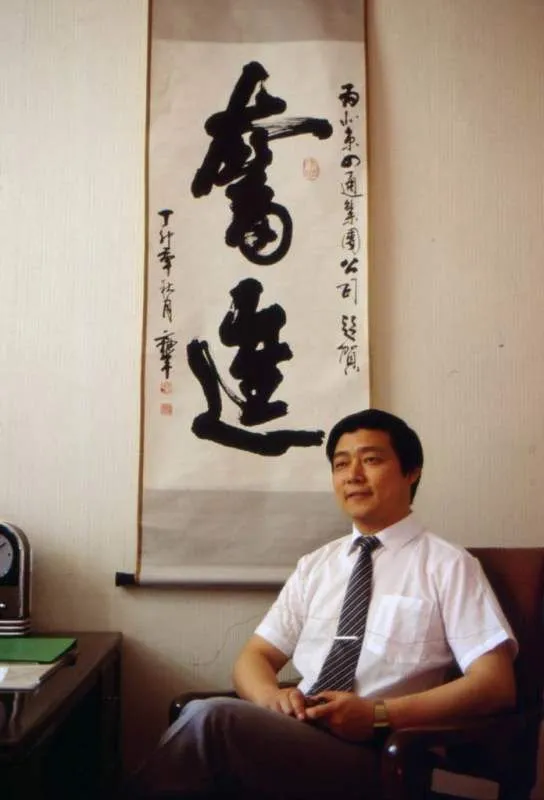
Wan Runnan: Mr. Yan Mingfu can be considered a typical democratic and open figure within the CCP leadership. Those who lived through the 1980s deeply understand that that decade marked the beginning of reform and opening up for China. From roughly 1979 to 1989, it was the best decade in modern China, or rather, the best decade since the founding of the People’s Republic in 1949: emancipation of thought, striving for strength, continuous innovation, forging ahead, opening up to the outside world, presenting a vibrant and thriving scene.
In my mind, Yan Mingfu is a very important member of the CCP’s reformist camp. To be fair, the main commander of reform and opening up at the time was still Deng Xiaoping, with his main generals being Hu Yaobang and Zhao Ziyang. Looking back now, the reformist camp was almost completely wiped out after eight or nine years. First, in 1987, people like Hu Yaobang and Zhu Houze withdrew from the stage of history that year. In the 1980s, the reformists were packed with top leaders, including Wan Li, Xi Zhongxun, and others, all of whom were at the national level, all born in the 1910s. Xi Zhongxun was the oldest, born in 1913; Hu Yaobang was born in 1915; Wanli is 1916; Zhao Ziyang was born in 1919. So, among the generation of these past ten years, Zhao Ziyang is the youngest. A considerable number of them were originally intellectuals, especially those who joined the Communist Party through the “December 9th” democratic movement; in fact, these people were the most democratic in their thinking.
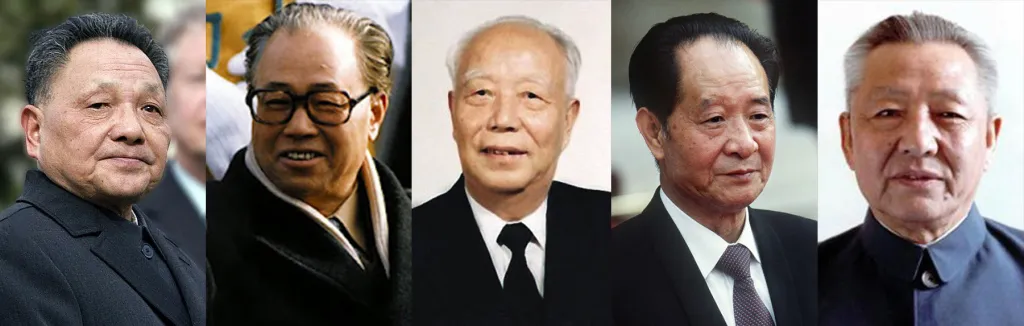
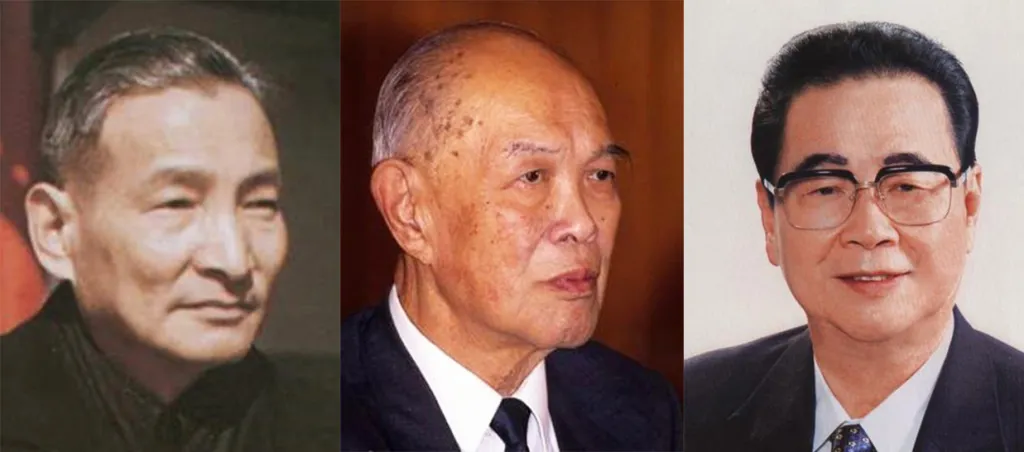
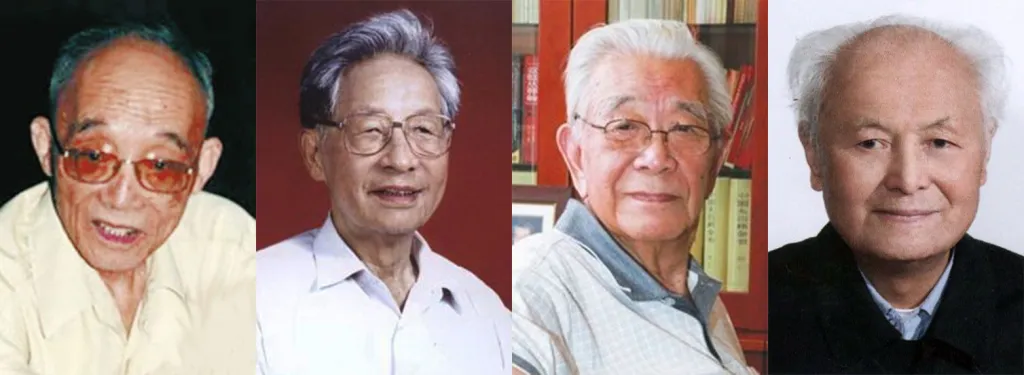
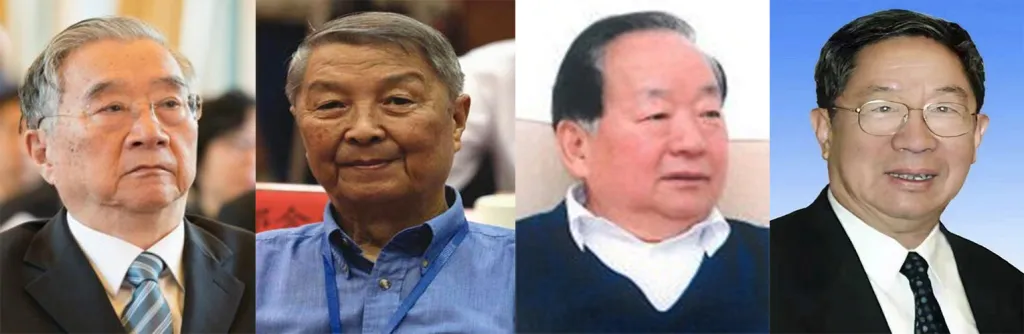
Four intellectuals with notable influence were: Du Runsheng, Li Chang, Yu Guangyuan, and Li Rui. These four were very resolute during the ’89 Student Movement, so after Deng suppressed the movement in 1989, he expelled them from the Party. Du Runsheng was in charge of agricultural reform, Li Chang was at the Central Commission for Discipline Inspection, Yu Guangyuan was the advisor to Deng Xiaoping’s writing team, Li Rui was from the Organization Department, and a large number of Party cadres, including Xi Jinping and Xiang Nan, were all organized and promoted by Li Rui. These people are all gone now. Among the younger generation of leaders, or within the CCP’s echelon, there are mainly four people. These people were born in the 1920s and 1930s: Hu Qili and Tian Jiyun, both born in 1920, and Zhu Houze and Yan Mingfu, both born in 1931. Look at this camp—in the 1910s, late 1920s, and early 1930s, the team was actually very complete, but in 1989 and 99, it was completely wiped out. So I think there is a topic to discuss today: the original goal was to promote political reform and democracy, but among the reformers, the older generation of reformists like Hu Yaobang, Zhao Ziyang, Xi Zhongxun, Li Chang, Yu Guangyuan, and Li Rui, and the younger ones like Hu Qili, Zhu Houzhe, Tian Jiyun, and Yan Mingfu, were basically eliminated. Where is the lesson here?
Chinese-style reform and democratic factions
Wan Runnan: The concepts of reformists, enlightened factions, and democrats are not the same.
Tian Mu: The CCP proposed ‘political system reform,’ or ‘reform and opening up,’ with goals that are both clear and vague. During Mao Zedong’s rule, political campaigns were frequently launched nationwide. In August 1962, Mao proposed ‘class struggle as the guiding principle,’ and ‘regarding class and class struggle, we must speak every year, month after month, every day.’ In 1963, Mao further pointed out that ‘class struggle is effective once grasped.’ The “Cultural Revolution” and the “Sixteen Articles” formally proposed “grasp revolution, promote production.” The eight years of continuous ideological and political struggle during the Cultural Revolution pushed the entire Chinese economy to the brink of collapse.
At the Third Plenary Session of the 11th Central Committee of the Communist Party of China in 1978, the CCP led by Deng Xiaoping rejected the ‘class struggle as the key link’ and proposed the ‘economic construction as the center’ approach. Although it does not mention denying Mao’s line and abandoning the ‘class struggle’ line, it is tantamount to denying Mao and changing courses, namely: ‘internal reform, external opening-up.’ Reform and opening up encompassed ‘democracy and the rule of law.’ The conference argued: socialist construction requires centralized and unified leadership, but sufficient democracy is essential to achieve proper centralization. In the past, democratic centralism was not truly implemented; without democracy, there was too little centralism. However, during that period, after experiencing dictatorship, there was a particular emphasis on democracy, but it was always reflected in slogans, such as: ‘To safeguard people’s democracy, we must strengthen the socialist legal system, institutionalize and legalize democracy.’
Although it discusses democratic politics, separation of party and government, and legal system construction, there are no specific policies or detailed regulations. According to the elders of ‘Twin Peaks Politics’ Deng Xiaoping and Chen Yun, Deng proposed the ‘Cat Theory’: ‘It doesn’t matter if the cat is black or white, as long as it catches mice, it’s a good cat.’ Chen Yun proposed the “Feeling Theory” and the working method of “crossing the river by feeling the stones.”
The
reformist and enlightened faction at the top of the CCP was completely wiped out
Liao Tianqi: The reformists or enlightened factions Lao Wan mentioned were completely wiped out—was that before 1989, or after 1989?
Wan Runnan: Before 1989, there were two people: Hu Yaobang and Zhu Houze, mainly Hu Yaobang. All the people I just mentioned were after 1989.
Hu Yaobang’s overly optimistic reform led to conflicts with other CCP leaders. Most importantly, in 1986, Hu Yaobang began promoting the ‘abolition of the lifetime system for cadre leadership positions.’ Chen Yun accused Hu of acting impulsively and failing to consider the specific circumstances. Hu’s overly liberal political attitude exceeded the limits of what Deng Xiaoping could accept. From the end of the same year to early 1987, the ’86 student movement erupted across China, with massive demonstrations erupting in 17 major cities including Hefei, Wuhan, Shanghai, Beijing, Kunming, Guangzhou, and Tianjin, calling for slogans like “Democracy, freedom, human rights, anti-officialdom, and anti-corruption,” shocking Zhongnanhai and ultimately leading to Hu Yaobang’s downfall.
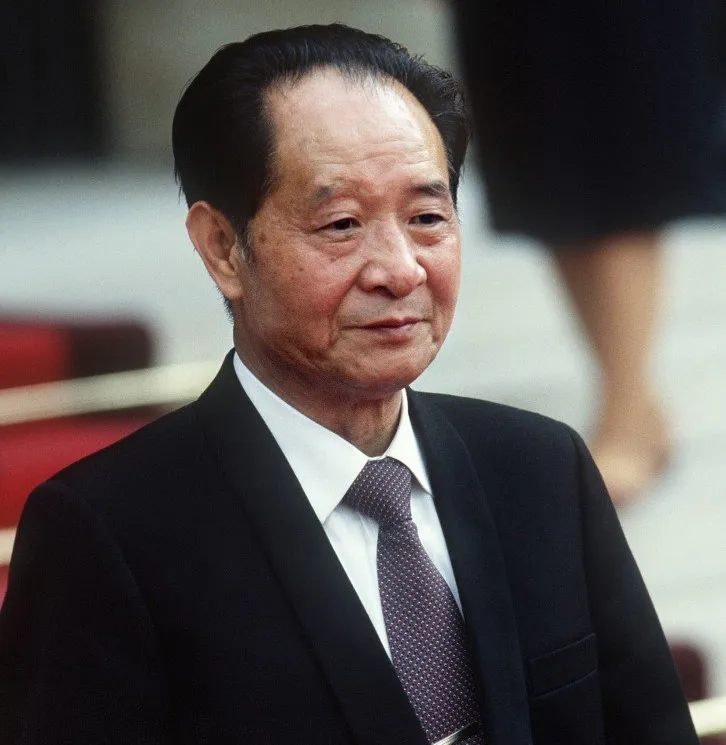
Hu Yaobang’s resignation was a prelude, because the ‘1989 Student Movement’ was precisely because of Hu Yaobang’s death. In a sense, the political turmoil of 1989 was also a continuation of Hu Yaobang’s downfall. Xi Zhongxun believed the handling of Hu Yaobang was unfair, even slamming the table at a Politburo meeting, saying: “You are staging a palace coup!” So Xi was eliminated because of this. Although he was still Vice Chairman of the National People’s Congress in 1989, in reality, he has already lost his voice.
Recently, a friend in the United States who does research asked me, what kind of behavior did Xi Zhongxun have in 1989? I really can’t remember. At that time, we had a lot of contact with the NPC Standing Committee, but we contacted Hu Jiwei, and through him we reached Wanli. By then, Xi Zhongxun had already lost his voice. Xi had spoken up for Hu Yaobang in 1987 but had already been sidelined.
Zhu Houze was originally the head of the Propaganda Department of the Organization Department, and he was one of the four young people. In reality, the Central Propaganda Department is a department that spreads rumors, acts tyrannically, and controls ideology. The only minister praised and respected by the public is Zhu Houze, known as the ‘Minister of the Three Leniency.’ He once proposed the ‘Three Leniency Policy’ (tolerance, tolerance, and leniency) to the arts and academic circles. At that time, Zhu had not yet been completely out of the race and had been transferred to the General Labor Union. In 1989, Zhu Houze donated money to students in the name of the Federation of Trade Unions.
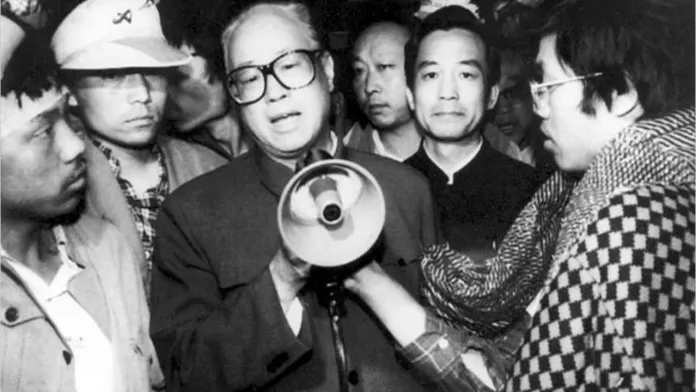
During the ’89 Student Movement, Zhao Ziyang stood out particularly well, at least refraining from shooting, while Zhu Houze directly supported the students, and Yan Mingfu also performed excellently, advocating dialogue with students and actually promoting dialogue. Many scenes of his conversations with students were deeply moving to us. He almost shed tears as he told student representatives, “You need to give the reformists some time. I am willing to return to Peking University with you as a hostage.” Because at that time, Gorbachev was being received.
Yan Mingfu, through Tao Siliang, Zhou Duo from Sitong, Dai Qing, and others, asked them to organize students to go to the United Front Work Department for direct dialogue. Yan Mingfu personally participated in the dialogue. Yan Mingfu was extremely sincere throughout this process, persuading many students at the time. But when these students returned to the square, they were replaced by more radical students. The later history is also interesting: at the time, the most opposed to compromise with the Communist Party and opposed dialogue, condemning them as a “betrayal of the student movement.” Among them, Li Lu, who was extremely radical, even colluded with the Communist Party after June Fourth. In other words, those who were the most radical back then were one of the factors that led to the complete downfall of the reformists, with Deng Xiaoping as the main culprit.
China’s transformation is top-down
Wan Runnan: If it’s a problem that can be resolved peacefully, why resort to gunfire? As soon as you draw your gun, you start bleeding. Therefore, the historical culprit is Deng, and lessons must be learned from this.
Liao Tianqi: What’s puzzling is that at that time, the CCP’s reformist and progressive faction was not very weak. For example, Hu Jiwei of the National People’s Congress, Chairman Wan Li, United Front Minister Yan Mingfu, Politburo Standing Committee member Hu Qili, and CCP General Secretary Zhao Ziyang—they all understood and sympathized with the students. Why couldn’t such powerful political forces restrain Deng Xiaoping, Yang Shangkun, Li Peng, and others in their insistence on using force? They committed brutal violence against students and civilians, so why didn’t the enlightened faction stand up to oppose it? Don’t they have military support? This chance should be 50% against 50%, right? How could they have been completely wiped out?
Wan Runnan: That’s a very good question, and I’ve been thinking about it all along. I personally experienced the entire process at the time. Reflecting afterward and reviewing various materials, I truly believe it was a tragedy! It is the tragedy of the Chinese people, the tragedy of the Communist Party, and also the tragedy of Deng Xiaoping. It could have been different. Whether you call it a stroke of luck or a coincidence, the root cause of this tragedy still lies with Deng Xiaoping.
Manypeople have talked about these details before, but now there’s a new perspective that everyone can discuss. The opposition between reformists and conservatives was very clear. In fact, there were two command centers at the time: Deng Xiaoping and Chen Yun, also known as the “Twin Peaks Politics.” Yang Jisheng (a renowned reporter at Xinhua News Agency, professor at the China Journalism Institute, and deputy president of the magazine Yanhuang Chunqiu), a senior at Tsinghua, wrote “Tombstone” and also wrote about the entire process of “June 4th.” The book is titled “Political Struggles in China’s Reform Era.” I think this book is excellent. He raised a question using the concept of “twin-peak politics,” meaning there are two peaks: one is Deng Xiaoping, the other is Chen Yun. Chen Yun also had quite a few men, including several top generals like Deng Liqun, Yao Yilin, Hu Qiaomu, and Li Peng. Of course, Li was a very incompetent one and didn’t play a key role. In terms of economic policy, Yao Yilin basically handled it, and of course, it was Chen Yun’s ideas. I believe it should be the “Empress Dowager of Two Peaks.” After Hu Yaobang was captured, he privately sighed, “Being emperor is not easy!” That was a private conversation with Wang Heshou. Hu Yaobang, Wang Heshou, and Tao Zhu had a very close relationship in Yan’an at the time, calling themselves the ‘Oath of the Peach Garden,’ a very close bond. Unfortunately, Wang Heshou immediately passed this message to Deng Xiaoping, so in the end, the three Taoyuan brothers were just bullshit! The Communist Party is disloyal and unprincipled.
In other words, in Hu Yaobang’s eyes and mind, he was only playing the role of a son emperor, with the Retired Emperor above him—this Retired Emperor was Deng Xiaoping. In fact, Deng Xiaoping was not the Retired Emperor, or rather, there were two Retired Emperors, similar to Empress Dowager Ci’an and Empress Dowager Cixi (Empress Dowager of the Eastern Palace and Empress Dowager of the Western Palace) during the Tongzhi and Guangxu periods of the Qing dynasty. In this political landscape, all reformists sided with Deng Xiaoping, while all conservatives were led by Chen Yun. In terms of power comparison, the conservative camp is far behind the reformist camp. Zhao Ziyang, Hu Yaobang, General Secretary, Premier, and Chairman Wan Li—each of their subordinates was elite and capable generals. Among the intellectuals, they were among the most thoughtful, arguably the most democratic in the Communist Party, because they were university students who had participated in the “December 9th Movement.” These people have always held democratic ideals: Du Runsheng, Li Chang, Yu Guangyuan, Li Rui, including Hu Qili, Tian Jiyun, Zhu Houze, and Yan Mingfu. The Propaganda Department and the United Front Work Department are two very important departments within the Communist Party system.
Liao Tianqi: In the past 30 years, many countries undergoing democratic transitions have mostly carried out bottom-up democratic movement reforms, but perhaps only Taiwan has experienced top-down social transformation (change). Top-down institutional reform, once the interests and rights of the ruling class are involved, will trigger backlash or counterattacks. Deng Xiaoping proposed reform and opening up. Originally, the ‘1989 Democratic Movement’ was the best opportunity, much like Eastern European countries in the early 1990s, which swiftly completed the country’s democratic transformation. But sadly, it was precisely Deng Xiaoping who suppressed the democratic movement of the Chinese people.
Conclusion
Thedefeat at Waterloo marked the end of the First French Empire led by Napoleon; The armed and bloody suppression of the ’89 student movement marked the end of the ‘Little Spring’ era of reform and opening up advocated by Deng Xiaoping.
Xiaoping Rose and Fell — From Mourning Yan Mingfu to the End of That Era (Part Two).
In the ten years following the Cultural Revolution, Deng Xiaoping’s reform and opening up brought China a gentle breeze, Mao’s philosophy of struggle was rejected, and the overall social environment appeared relaxed and sunny—a period of the best period for China-U.S. relations. At that time, friendship and cooperation were the main themes of both countries, not the competition and rivalry we see today. Back then, US-China relations drove China’s opening up, launching comprehensive efforts through multiple channels in culture, education, and other areas, breaking through the traditional red restrictions on knowledge, culture, and thought since the founding of the People’s Republic of China. Advanced management and products from Western societies also provided models and nourishment for China’s socio-economic transformation. Furthermore, the dual interactions between officials and the public in the East and West subtly introduced the values of freedom, democracy, and human rights. At that time, the Chinese Constitution had not yet mentioned the concept of “human rights thought,” which itself was a major breakthrough, providing ideological and value guidance for social change.
The ‘1989 Democracy Movement’ appears to have been triggered by Hu Yaobang’s death, and is a continuation of the political turmoil surrounding his resignation. But in essence, the superstructure and economic base no longer matched. After the continuous opening of the 1980s, Chinese society had its doors and windows wide open, bathed in the gentle breeze of Western liberal democracy. Therefore, from the perspective of culture and knowledge, figures like Fang Lizhi, Liu Binyan, and Wang Ruowang are not accidental or isolated figures; From an economic development perspective, Wan Runnan, Bu Xinsheng, and others are not isolated phenomena; they represent the group of reformers in China’s private enterprises. Hu Yaobang’s abnormal resignation was precisely against the direction of reform and opening up, a rejection of the vibrant “Little Spring.” The people were unwilling to accept such regressive actions, which was the real reason for the outbreak of the “1989 pro-democracy movement” back then. The wave of bankruptcies and closures of state-owned enterprises in the early 1990s was essentially due to lagging reform policies and difficulty addressing the deep-water areas (systems and institutions), which dragged down and dragged down the planned economy, preventing the “economic construction-centered” approach from being truly implemented.

Our topic continues from this …….
Yan Mingfu stood at the pinnacle of his era
Wan Runnan: Especially Yan Mingfu, who had a very good relationship with Deng Xiaoping’s family and was a ‘second-generation revolutionary.’ His father, Yan Baohang, was engaged in secret operations in Northeast China at the time. He was a Communist International spy embedded within the Nationalist government, joined the CCP in 1937, and after 1949 held positions in the Ministry of Foreign Affairs and other posts. At that time, Sitong had a deputy general manager named Wang An. His parents were from the same generation as Yan Baohang, so they had been together since childhood. Yan Mingfu was the main person in charge of the encyclopedia, and Wang An also participated in its work, which later led to Sitong.
Yan Mingfu wrote in his autobiography that the two most meaningful things he did in his life were compiling an encyclopedia. The compilation of the encyclopedia was a milestone of the French Enlightenment, regarded as a key to knowledge that could open people’s horizons and “illuminate” the minds of the world. Once people understood the world clearly, society naturally improved; it can also be considered a key to the Enlightenment. In the 1980s, China also had an encyclopedia, and Yan Mingfu played a crucial role. The second meaningful thing was that he did charity work. After 1989, he mainly engaged in charitable work as Vice Minister of Civil Affairs. In fact, he didn’t dare to speak or didn’t say it. What truly mattered in his life was his conversations with students in 1989. That kind of upright courage is the attitude needed in an era of change. As a CCP ruler, this is the responsibility and duty Yan Mingfu should bear.
Liao Tianqi: Lao Wan, you made it very well, but I want to look at the overall environment—namely, the occurrence of the ’89 Democracy Movement.’ It wasn’t just about politics, nor just the confrontation between reformists and conservatives, or between enlightenment and conservatives—it also changed on many other levels. For example, in terms of culture, you just mentioned the compilation of China’s Encyclopedia, as well as social and economic reforms, such as the shift toward agriculture and the gradual rise of the private economy. It seems that society as a whole is slowly opening up, and Lao Wan has played a very important role in this process. I think we should also talk about other aspects and other aspects. Before the ’89 Democracy Movement, the entire Chinese society was mobilized. As we mentioned earlier, the ‘1980s’ were China’s ‘Little Spring’ period, which was very important. The overall environment underwent qualitative changes across culture, economy, ideology, news, and politics. But I still hope to broaden the scope of our discussion. For example, China’s private economy first challenged and broke through the then-national economic system and the restricted planned economy.
Reform and opening up have difficulty entering deep waters
Liao Tianqi: Today, our discussion of this issue is not limited to the merits and faults of the ‘1989 pro-democracy movement.’ This topic has been discussed overseas for more than thirty years, and I have listened to it for over thirty years. Why can’t we place it in a broader discussion? Today, China has once again walked a very narrow path. Deng Xiaoping’s autocratic dictatorship, like Mao Zedong’s, plunged China’s “Little Spring” into hell overnight, crushing all the enlightenment factions and wiping them out. This is the terrifying hell caused by personality cults and dictatorial dictatorship.
Today’s Chinese society has once again returned to the authoritarian dictatorship of the Mao era. Xi Jinping alone was uniquely privileged, and the whole world witnessed Chinese society being driven by Xi Jinping’s hardships. Today, reflecting on Mr. Yan Mingfu’s role in the ‘1989 Democracy Movement is of great significance for today. But I wonder if we could enter other fields and talk about it. Tian Mu comes from the business world—could you share your thoughts and perspectives on the events of those years?
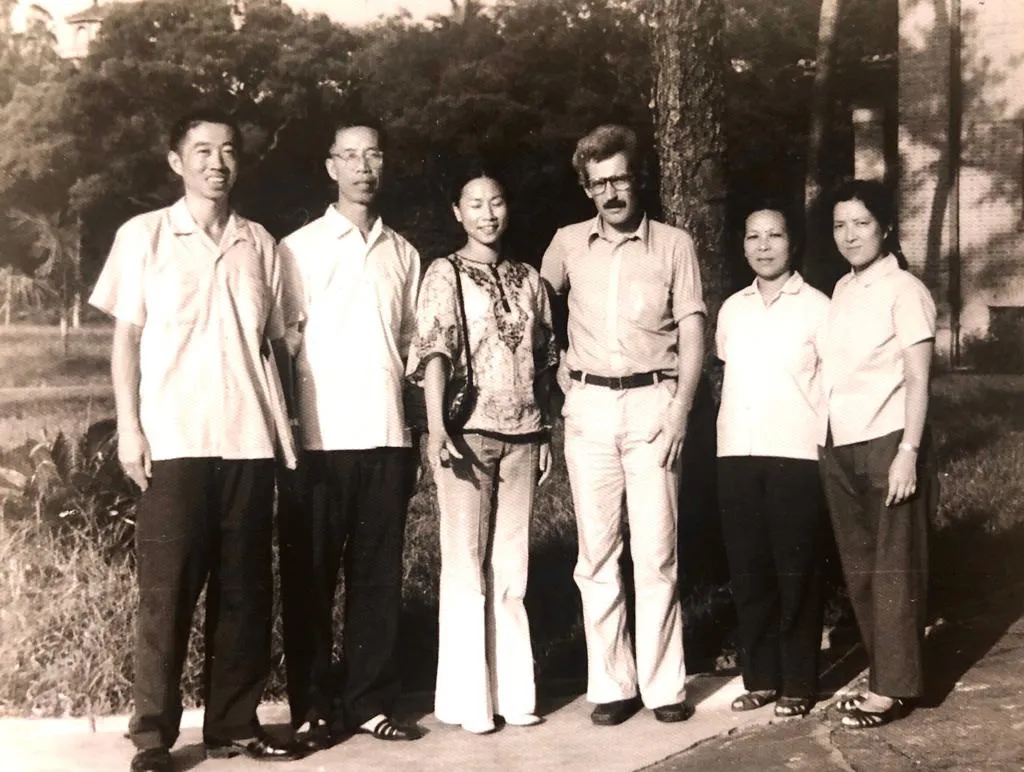
Tian Mu: Lao Wan just described the political aspect of reform and opening up, mentioning that the entire 1980s was a ‘little spring’ for society. I deeply felt this, because I worked in management at a state-owned enterprise. From my professional perspective, what struck me most was the rise of private enterprises in the economic sphere, breaking through the constraints of the national economic system and the planned economy system. This is an important aspect of social transformation.
In the mid-1980s, I wrote a paper titled “A Brief Analysis of Timely Adjustment of Enterprise Product Structure,” which argued for the vitality and development of enterprise operations. First, product upgrading and renewal; second, timely adjustment of product structure—these are essential for business managers to know and understand. The prerequisite is that enterprises must be freed from the constraints of a planned economy; only a market economy can provide such an environment for enterprises. This is why, back then, Wan Run Nan and Sitong Company became objects of admiration and jealousy for state-owned enterprise managers.
In the early 1990s, a number of state-owned enterprises fell into ‘triangle debt,’ going bankrupt and closing due to lack of funds. On the surface, it appears to be a shortage of funds. The capital turnover period of a company is determined by the company’s scale and product production process. Once products fail to sell and the market response under the guidance of the planned economy is slow, a chain reaction will occur, triggering operational chaos across the entire industry and related enterprises, and triggering triangular debt is inevitable. On the surface, the problem was a lack of funds, but in essence, it was caused by the constraints of the planned economy. Enterprises kept their products unchanged, sales channels gradually narrowed, and eventually lost the market. Some of the unsold products were distributed to employees for street sales, while some were used as wages to offset workers.
The ancients had foresight, while companies at that time lacked market communication and alignment. The pioneer of China’s economic model, the former Soviet Union, also suffered a similar downturn, and the old enterprises in the Northeast were equally doomed. Back then, the managers of state-owned enterprises were just above the authorities, giving too little deep thought or exploration into the vitality and survival strategies of enterprises. The reasons for the success of private enterprises: first, their products directly align with market supply and demand; Second, breaking free from institutional constraints; Secondly, it was the earliest to freely introduce foreign capital, all of which are early opportunities for enterprise survival and development, making a strong impression.
Around the time of the ‘1989 Democracy Movement,’ China’s economy had become a giant that was hard to turn around. Under the planned economy, it was inevitable to decouple from the market, deeply rooted and deeply entrenched. The basic approach was to treat the root cause, and even with reform and opening up, it was difficult to address the deep waters of economic development, starting from the system and planned economy. In the mid-1990s, facing the tragedy caused by the planned economy, the state did not address the root causes or carry out enterprise reforms. Instead, it adopted a policy of abandonment and abandonment, significantly devaluing state-owned enterprises and transferring them to private enterprises, causing the country to suffer irreparable and enormous economic losses.
In my view, from the perspective of enterprise economic development at the time, reform and opening up could not remain just slogans or remain at the political level. The purpose of reform and opening up is economic development, and it should start with the national economic system. Lao Wan once said: The economy is the foundation and foundation of social development and progress. Without strong economic strength, everything is empty.
However, after more than thirty years of living in Germany, I have gradually realized that for a country, it is important to balance a market economy and a planned economy. This is another major issue, and I will discuss it further with you based on facts and data when I have time.
The
earliest path of reform started from the grassroots
Wan Runnan: Let me also talk about economic issues. Why does China pursue reform and opening up? Now that Xi has made China like this, where exactly is the opportunity? Where is the breakthrough? These two are actually the same issue. The reason for reform and opening up was because Mao was a personal dictator, initiating the Cultural Revolution, and in order to eliminate political enemies, he dragged the entire country into a political movement and ruined the national economy. In the Chinese Communist Party’s own language at the time, “the national economy was on the verge of bankruptcy.” Material supplies were scarce, and the 1970s were China’s most difficult decade, worsening day by day. Because Mao keeps stirring things up, just like Xi Jinping is now—messing around nonstop. In this context, reform and opening up started from the lowest social strata, starting with the peasants. Life was unbearable, and when they were poor, they sought change. At that time, it was not called “reform”; it was the peasants working secretly. The earliest were farmers in Anhui, who risked signing contracting agreements and divided land and leased their own land, starting a contract responsibility system. Later, disputes arose in local governments. Wanli was the chief official of Anhui Province, Zhao Ziyang was the chief official of Sichuan Province. Upon learning of this development, they were the first to support the farmers’ contracting system, viewing it as ‘rural reform.’
After rural reforms began, it naturally extended to the cities. How did urban reform come about? During the Cultural Revolution, a large number of young people lost their jobs, just like today’s 16-24 year-olds, with an unemployment rate of 20.8%. Back then, there were no job opportunities in society, so these people were sent to the countryside, supposedly to the borderlands, to places where the country needed them. This was Mao’s ‘educated youth going to the mountains and down to the countryside’ policy, and Xi Jinping was also one of those sent down back then. But at the end of the 1970s, after the Cultural Revolution ended and Mao died in 1976, the ‘Gang of Four’ was arrested. At that time, a large number of educated youth who had gone to the countryside returned to the city, facing the same problem. How should these educated youths be managed? In reality, there aren’t that many job openings, so encourage them to find jobs themselves. So back then, there was the so-called ‘Big Bowl Tea Sales’ in Beijing. What exactly was ‘Big Bowl Tea’? They would just leave a few bowls of tea at the stall, and passersby would drink a bowl for a penny. Many educated youths relied on this to make a living, and there were also the long-standing Fool’s Sunflower Seeds, which were roasted by themselves and smelled especially good. At that time, such phenomena emerged.
Liao Tianqi: Gradually, ten-thousand-yuan households emerged.
Wan Runnan: Yes, that’s how the ten-thousand-yuan household is created. So how is rural reform combined with urban reform technology? Because many rural community and brigade enterprises needed technical upgrades and lacked technical strength, they hired so-called Sunday engineers. The first group of people who helped rural commune teams and enterprises with technical transformation were all imprisoned for this. People use weekends to go and work as engineers on Sundays—what’s the crime of that? In fact, Sitong originally started as a community team enterprise we established. Intellectuals cannot run their own enterprises, and the state does not have such policies. I remember it was very clear. When we proposed starting a company and went to Haidian District Administration for Industry and Commerce, they didn’t know what to do. In other words, there was no policy or targeted market. Later, when we partnered with Siji Qingxiang, we registered as a community and team enterprise in Siji Qingxiang. This was the first stage of Sitong. The second stage is when people think you’re out of place. Why are you tech companies or companies? Four Seasons Green Village grows vegetables, and because they complete vegetable tasks well, they can even give us tax incentives. But by the following year, 1985, when the educated youth returned to the city, recruitment of educated youth was encouraged, and later it became a collective enterprise for educated youth. So every step we took was aligned with the pace of economic reform at the time.
Sitong Company’s path of high-tech exploration
Liao Tianqi: I have a question. Since Sitong Company started operating, has there been any national policy support? Back then, it was still a planned economy. Did the government use policy permissions to hold you back, or did it encourage you?
Wan Runnan: There was no encouragement from official institutions. To put it simply, what encouraged us were leaders with reformist ideas. At that time, the leaders of Haidian District were originally senior students from Tsinghua. When we started, the Party Secretary of Haidian District was Jia Chunwang. After Jia Chunwang joined the Beijing municipal government, it was Zhang Fusen, who was also an alumnus of Tsinghua, so we found them to understand and communicate easily. Actually, they were also in a difficult position and didn’t know what to do. So we were introduced to Dongsheng People’s Commune and Sijiqing People’s Commune under Haidian District’s jurisdiction. These two communes are adjacent to Haidian District, Tsinghua University, and Peking University, making them the two closest communes. At that time, we contacted the commune leader, and the township chief of Siji Qingxiang was more proactive and willing to accept us.
Liao Tianqi: You’ve come all this way, but in reality, there are no relevant policies from above? There are no specific rules or regulations for opening up the economy. You could say you set up your own company, combining rural and township institutions with the intellectual community. You are working hard to explore and operate, seeking a path for reform yourself. Is that what you mean?
Wan Runnan: Yes, we carved out a path in a wilderness, which perfectly fits the saying: ‘Crossing the river by feeling the stones.’ Later, the Zhongguancun Development Zone was opened for high-tech enterprises. After we “crossed the river,” we thought this approach was very good, essentially a golden avenue for private enterprise reform. Then we had the technology development zone, technology enterprise policies, and so on.
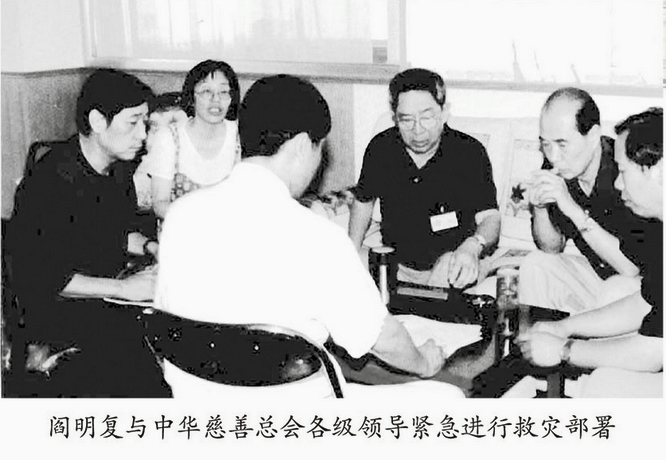
Conclusion
Thedirection and goal of constitutional democracy will always be the primary issue that China’s system must address. Throughout the 1980s, Chinese society made significant strides toward modern democratic civilization in economic, cultural, ideological, and news fields. CCP officials such as Hu Yaobang, Zhao Ziyang, Hu Qili, and Yan Mingfu all showed positive ideas and actions. It can be said that these officials genuinely hoped for reform of China’s political system.
However, political reform cannot keep pace with the needs and pace of social progress as a whole; if it does not advance, it will fall behind, ultimately becoming an obstacle and stumbling block.
Constitutional democracy is China’s unfinished business — From the perspective of mourning Yan Mingfu and discussing the end of that era (Part 3).
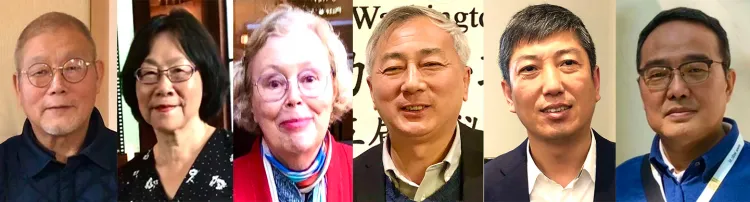
After the ‘1989 Democracy Movement,’ there was no hope or possibility for reform among the top ranks of the CCP. Combined with the current Xi administration, this has left the Chinese very disappointed, and China has returned to a dictatorial rule under one person. The reformists, democrats, and enlightened factions of Zhu Houze, Yan Mingfu, and others from back then have disappeared from the CCP leadership. Even those who dared to speak out, like Cai Xia and Ren Zhiqiang, were eventually removed.
Looking back and commemorating Yan Mingfu, people still hope and expect that invisible democratic and enlightened factions still exist within today’s CCP organizations. The world once again recognized the characteristics of autocracy: one person exercises power over an entire social group, the constitution and laws become mere ornaments, and freedom, democracy, and human rights are merely mirages in the people’s dreams.
History tells us: democracy and freedom are inevitable in history and will inevitably come to future China, unstoppable!
The overall environment is evolving under an open climate
Liao Tianqi: Yuan Jun, when you were at Changchun First Automobile Factory, did you feel any changes in your company during the 1980s?
Tang Yuanjun: Lao Wan was an elite figure in Chinese society at the time, a person with resources and strength. At that time, I was a junior cadre in a company, a grassroots technician. Back then, I had little experience working in state-owned enterprises—it was rigid and fixed, and in a position, I honestly did my job. For the production workshop, process is the basis for manufacturing responsibility; for us, it’s just a job. At that time, I was in my twenties, and in terms of thought, I began to engage with and read Western literary works, which broadened my horizons for understanding the world. Some of us young artists gathered together, held gatherings, wrote some poetry, and we felt that society was changing. For me, what struck me most was that we stopped targeting counterrevolutionaries and no longer used repressive methods, which actually meant the system was already evolving.
At that time, I was in the company and had a keen sense of the current situation and environment, especially in the cultural and ideological fields. I once organized cultural exhibitions in my office, often attended democratic salons, and participated in discussions on social issues. The atmosphere was both enthusiastic and exciting, and some young people were especially excited, even harshly criticizing the Communist Party. Later, the Public Security Bureau sent people undercover and was designated as a counterrevolutionary group. The Changchun Public Security Bureau reported it. At that time, it was said that counterrevolutionary cases had to be reported to the central government, but after reporting, the authorities refused, claiming young people had ideological problems and handed them over to the company’s party committee for guidance. Afterwards, someone warned me not to continue, saying it was a political trend, so I took a long sick leave.
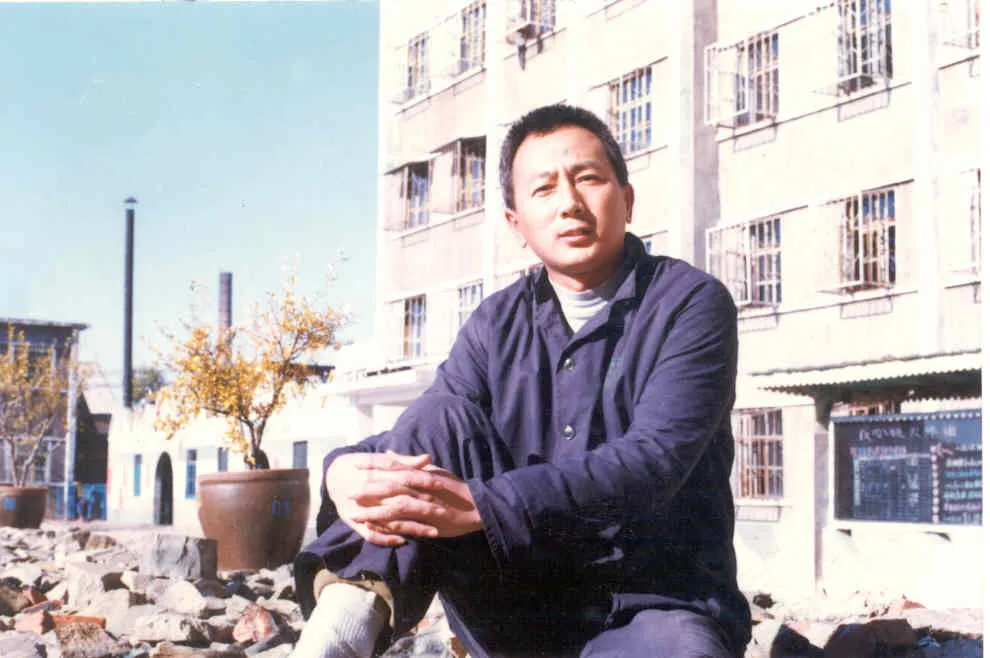
Tang Yuanjun: My understanding of Yan Mingfu, from the top leadership of the CCP, seems to be very remarkable. Politically, he has clearly shifted toward freedom and openness, which is admirable. His passing evokes memories and sighs. I think of the three most remarkable figures in the ’89 Democratic Movement: first, Wang Weilin, who bravely blocked military vehicles, representing the resistance; Second, soldiers stopping the chariot to try to bypass Wang Weilin, but the soldiers carrying out the mission remain restrained, refraining from indiscriminate killings; Third, high-ranking CCP officials like Yan Mingfu, whose efforts can influence the decisions of those in power, thereby influencing the course of history.
Yan Mingfu believed that May 14 to May 19 was a critical moment for peacefully resolving the street movement. He repeatedly consulted with student representatives to persuade and mediate, making every effort to achieve this. Despite their failures, as time passes, people realize that whether in resistance or resolving conflicts, these three characters demonstrate the humanitarian spirit of civilized humanity.
During the June Fourth crackdown, once gunfire rang out, lives were at stake, and everything changed. Communication and mediation, peacefully resolving social conflicts and conflicts—perhaps future Chinese people will learn these skills.
This was the feeling of Westerners living in China back then
Liao Tianqi: Mary, please tell us about you. You were already in China in the 1980s, had many connections with Chinese intellectuals and cultural figures, and contributed a lot to Wei Jingsheng’s freedom. Could you talk about the people and events you saw in China at that time, as well as some of your feelings?
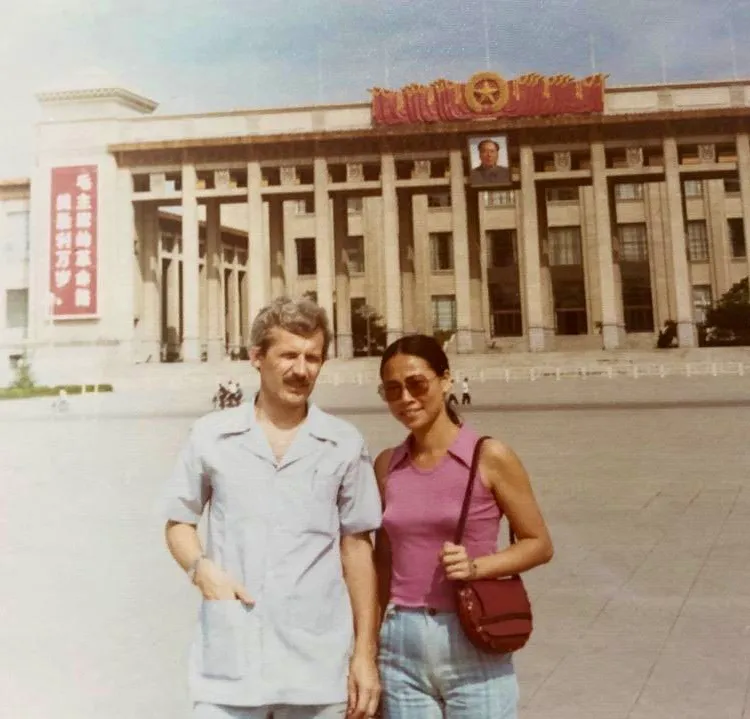
Mary Hou Zhiming: I was mainly in China in the 1970s, and I was very interested in the things Lao Wan talked about. During my years in China, China was very poor and had no freedom. Even if you wanted to grow some vegetables or sell some eggs, you couldn’t; you could only buy one or two eggs at the farmers’ free market. There was no freedom at all, and the economy was completely empty. So when Lao Wan talks about the exploration and launch of Chinese private enterprises, I fully believe and understand them. Every step Lao Wan has taken has been difficult and not easy, and Zhao Ziyang has played a very important role in this regard. China’s reform and opening up, Zhao’s experience in Sichuan—I found it very interesting, but I can’t share my own experience or add: Lao Wan is a firsthand witness of China’s reform and opening up.

Tianqi just raised the question: although the enlightened forces also supported the June Fourth Movement, they were ultimately completely wiped out. I want to say a few words about this: have you recently noticed that the DNA of Xi Jinping’s imperial system? Although Deng Xiaoping did not use the term at the time, he still adhered to the principles of the CCP. He felt that if the Party’s DNA was not protected, the CCP would lose its power, status, and interests, and more importantly, the CCP regime could not be sustained. People around Deng, such as Yan Mingfu, Zeng Qinghong, and Zhao Ziyang, I feel they all oppose repression, especially against using the military and force to suppress students and citizens. Deng Xiaoping’s principle and truth were: if the CCP does not suppress it, then the CCP will perish, the Party and the country will perish, and the CCP’s regime will cease to exist. The collapse of the former Soviet Union shocked and frightened Deng Xiaoping and the CCP regime.
The people have shaken the DNA of the CCP system. Today, Xi Jinping’s ruling team is exactly the same; if people even slightly disturb the legitimacy of the Communist Party, the CCP will not accept it. Although Xi Jinping now claims to maintain CCP rule, my sense is that he is mainly protecting his own rights. At present, I see that he cannot save China’s economy or its diplomacy; the only way is to attack Taiwan to shift global perspective and pressure.
Today, China’s human rights situation is very poor. Many people are deeply imprisoned, such as Guo Feixiong and Wang Bingzhang, as well as so many Tibetans and Uyghurs, who have been forced to leave their homes. For these people, we need to provide them with the greatest support, sympathy, and help.
Liao Tianqi: Mary added the finishing touch, restoring the scene of that time and reminding us that the real main thread was China’s personal dictatorship spanning several generations. The first was Mao Zedong, pushing China’s national economy to the brink of bankruptcy; Then came the strongman Deng Xiaoping who implemented reform and opening up. After decades of extreme poverty and backwardness, once the CCP let go, people went mad, each pursuing material needs, which was a huge driving force. Spiritually, people gradually awakened and began to seek freedom and democracy from the government. The CCP system could not meet the people’s expectations and demands, and eventually a conflict broke out—the “1989 Democracy Movement.” So what was the result? Why did the enlightenment or reformist faction completely collapse? It’s because of personal dictatorship! Mary was right—it was because Deng Xiaoping wanted to uphold the Communist Party’s genes and legitimacy, and in fact, it was also their personal ambition.
Now we face the same situation, and Xi Jinping must also uphold the Communist Party’s DNA. We cannot deny that since Xi Jinping took office, he has indeed done some things, no matter how much we oppose him. For example, although the Belt and Road Initiative is notorious, it also has significance in integrating global resources and geopolitics. Moreover, in recent years, it has indeed pushed China to the forefront of the international stage, putting it on equal footing with the United States. But crises are also symbiotic. Chinese society is full of various crises, and the problems from Mao’s administration that Lao Wan just mentioned are reappearing in China today. For example, the suppression of private enterprises and the suppression of various voices and dissent among the public—China has returned to a one-man dictatorial system. This is not only maintaining one-party authoritarianism but also safeguarding the Xi family’s rule.
Last year’s White Paper Movement was a form of social backlash. There have been many such seemingly accidental events in history, but they have inevitability and cannot be ignored. Today, as we look back and reflect on Yan Mingfu’s generation and the entire social scene at that time, we can draw parallel comparisons with the current situation in China as a whole, learn lessons from history, and stay vigilant. Xi Jinping is Mao Zedong, Xi Jinping is Deng Xiaoping—will he stubbornly continue his own path? What can we do, what should we do about it?
The people will not tolerate a regression in history
Wan Runnan: What you just said inspired me a lot. The 1980s were a decade of reactionary movement during Mao’s Cultural Revolution, pushing the national economy to the brink of bankruptcy, and ordinary people could no longer survive. Xi Jinping followed the same example: three years of ‘zero-COVID’ have almost pushed economic development to the brink of collapse, which is why the White Paper Movement and the Sitong Bridge …… shouted.
I am pondering a question: the Communist Party’s rise and fall is both economic; economic problems are always the underlying logic and fundamental cause of social change. The common people too—if they can survive, they’ll be struggling. But if zero-COVID means everyone can no longer survive, then shout out and resist. Currently, the youth unemployment rate has reached 20.8%, the entire market is deflationary, and the economy is facing major problems. Relying on frantically printing money can no longer solve the current problems. Therefore, people are closely watching China’s current economic situation. To put it this way, if it could get by economically, it could still barely survive. The Chinese people were simple—better to be peaceful dogs than to be people scattered by chaos. China is very large, and it’s hard for it to move, but once it does, it’s extraordinary. So, in my view, China’s future changes will still be economic. Now, all its actions can be said to be going against the grain, even surpassing Mao Dang’s youth.
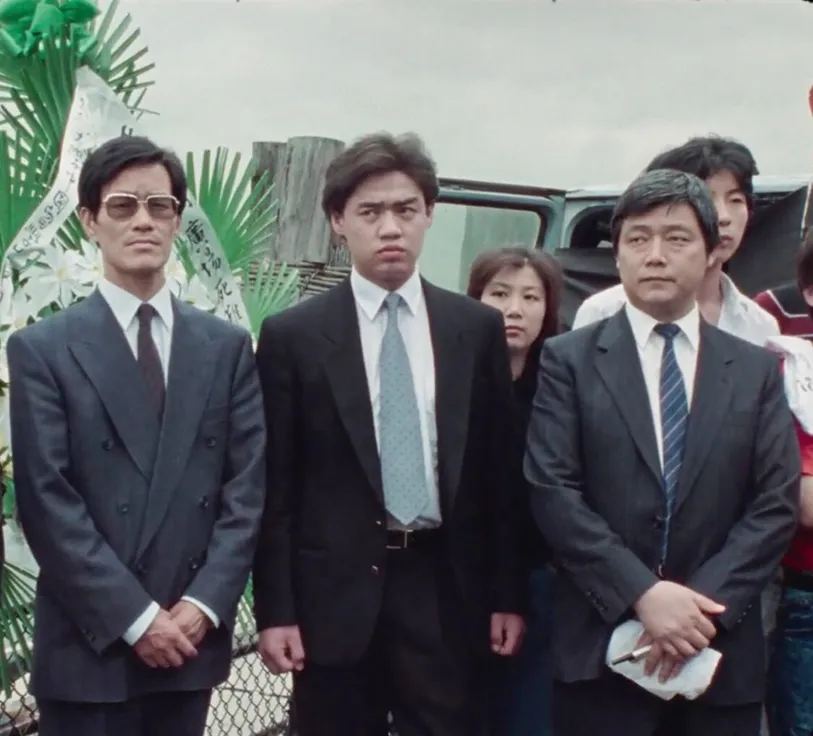
In today’s China, everything is controlled by the state; in reality, it is controlled by Xi alone. He said to concentrate efforts on major tasks, including rushing to build the Xiong’an Bridge, but concentrating resources can also lead to foolish or bad things. With the rise of the internet, information can no longer be blocked, and free dissemination can be used to crush authoritarian politics. It cannot be stopped, and society will become more transparent and open. But in reality, it’s quite the opposite. I was mistaken. The CCP uses firewalls, internet blockades, and cameras to monitor the entire population, thereby maintaining Xi’s personal autocratic regime. Similarly, with AI nowadays, I’ve observed many absurd research projects, such as using AI to assess how loyal a person is to the party—it’s almost completely out of the ordinary!
Liao Tianqi: The CCP treats people like pigs and dogs.
Wan Runnan: If development continues like this, problems will inevitably arise sooner or later, or rather, its economy is already in trouble. In this context, I believe it means a new transformation is about to begin. The problem is that the Chinese people are not very active or sensitive; the momentum and participation in 1989 were so grand and intense. Similarly, last year’s White Paper Movement was a silent protest. In a sense, Xi Jinping admitted defeat and eventually relaxed and gave up. Loosening up would have made things easier, and he had gotten through the tough times. In 1989, Deng Xiaoping said this was chaos and the students were quitting, but Deng insisted on being tough. Recently, someone asked me: Is there any other possibility in 1989? I replied, ‘Yes, it’s simple. It’s Deng Xiaoping’s fault. Whether it’s the student hunger strike or the square sit-in, there’s only one demand: you have to admit we are a patriotic movement. He just refused to say it, preferring to shoot, which led to this bloody outcome.’
Liao Tianqi: The Blank Paper Movement was a piece of cake, so Xi let it slide. But he has a dictator’s refusal to back down, which is just like Old Deng. During his tenure, he will risk everything to fight Taiwan, aiming to become a ‘national hero’ (in fact, a national criminal). He knew that once war broke out, the national consciousness of mainland people would immediately rise and support him in the short term. As Mary just said, the CCP must protect their DNA, and Xi Jinping is even more so, because without the Communist Party, he is nothing—they have nothing.
Xi Jinping does not back down from internal party dissent and civil dissent, and on foreign affairs, he has deployed ‘wolf warriors’ to compete on the international stage. The economic and trade war with the U.S. has evolved into a sharp political and defense confrontation. This was completely different from the situation during June Fourth, when Western countries had a favorable impression of China and were optimistic about its success. The June Fourth massacre briefly shattered the world’s friendly attitude toward China, but after Clinton took office, China and the U.S. began to reconcile and regain cooperation, opening doors to Beijing’s trade, trade, and technology. Now, the situation has changed 180 degrees. The U.S., along with its allies, is trying to defend, contain, cut off supplies, and embargo China from all sides. In fact, this situation has caused great harm to global peace and development. The Russia-Ukraine war has further pushed China into Russia’s embrace, marking a vicious trend. If this deadlock between China and the U.S. cannot be untied, world peace, prosperity, and development will become wishful thinking.
Conclusion
During the Mao era, the concept of ‘fighting and sitting the world’ was pioneered. To maintain the rule of the CCP and eliminate and eliminate outsiders, the focus was solely on ‘class struggle’ and neglecting ‘economic construction.’ This ran throughout Mao’s entire governance process. In his mind, only by ‘grasping revolution’ could ‘production be promoted,’ and ultimately, China’s economy plummeted and was on the verge of collapse.
From the very beginning, Deng Shidai abandoned ‘struggle’ and buried himself in ‘economy.’ For a time, the whole country was filled with vibrant spring, and those years resembled ‘riding high in the spring breeze, galloping swiftly, seeing all the flowers of Chang’an in a single day…….’ Unfortunately, when the ‘1989 Student Movement involved the power, interests, and status of the CCP rulers, Deng turned against each other, ordering the shooting of students and citizens to suppress them, ruining a decade of China’s reform period. Truly, it was ‘Xiaoping made it successful, and Xiaoping was the reason for its failure.’ From the perspective of autocratic rulers’ nature, it is the nature of interests and nature, and compared to Mao, they can be said to be in the same lineage.
During Xi’s era, we returned to Mao’s lifelong system, to autocratic dictatorship, and three years of ‘zero-COVID’ almost pushed China’s economy into the abyss once more. That’s why the White Paper Movement broke out, leading to the shouting …… on Sitong Bridge. When a dictatorship prevails, the law loses its function and becomes a pile of worthless paper. Social justice and equality will vanish, and such rulers undoubtedly become enemies of the people and the nation.
For the Chinese people, what they most desire is national prosperity, social fairness and harmony, freedom and democracy, and happiness and well-being. Therefore, for the country, promoting economic development comes first in all matters; this is the most important thing, and this is the foundation for benefiting the people. China does not need an autocratic system, nor does it need a dictator. Therefore, to revitalize the country, revitalize the nation, and develop the economy, the first step is to reignite the democratic revolution movement and overthrow the CCP’s totalitarian rule. Only then will China have hope and a future!
Reposted from Voice of Europe