Hu Ping, July 12, 2023
Today, July 13, 2023, marks the sixth anniversary of Liu Xiaobo’s passing.
On December 8, 2008, just before the public release of Charter 08, the CCP authorities arrested Liu Xiaobo and imprisoned him. A year later, he was sentenced to 11 years in prison for “inciting subversion of state power.” This verdict shocked many people. Charter 08 was very lenient, with over 300 signatories in the first group, but only Liu Xiaobo was imprisoned and convicted, serving a sentence of 11 years. At the time, I guessed that most likely the CCP authorities wanted to exile Liu Xiaobo overseas.
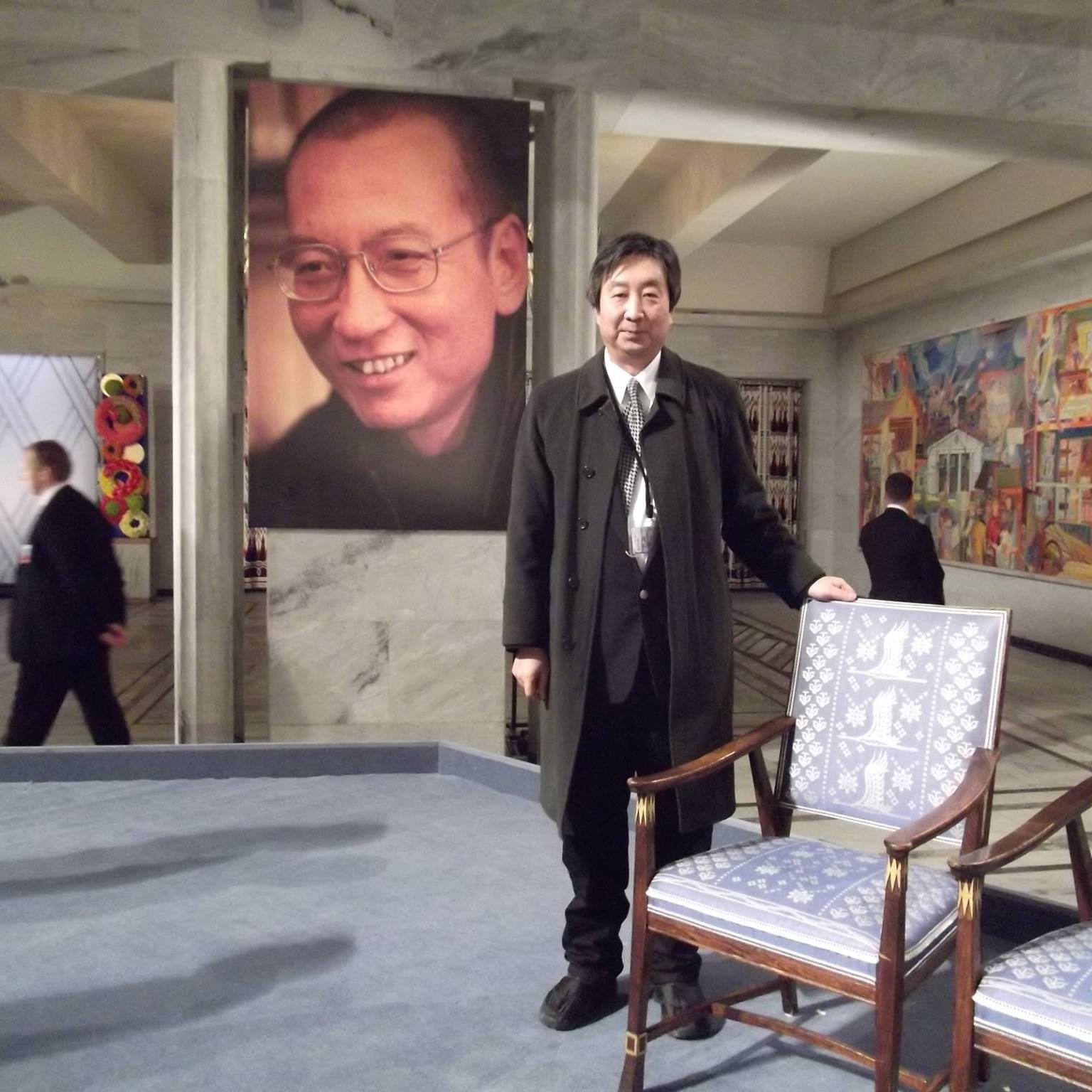
In 2008, Professor Hao Jian from Beijing Film Academy conducted a video interview with Liu Xiaobo. This was Liu Xiaobo’s last recorded interview before his death, and it was extremely precious. In this interview, Liu Xiaobo mentioned that during his sentence to re-education through labor from 1996 to 1999, he had the opportunity to be exempted from re-education through labor and leave China for the West. Liu Xiaobo said: “In 1998, when Clinton visited, the Chinese government spoke with me (Liu Xiaobo) and sent me to the United States under the pretext of medical parole. To be honest, if you really sentenced me to more than ten years, like Wang Dan and Wei Jingsheng, I might still consider it. To be honest, I’ve already passed half of these three years. There’s still a year and a half left, and I can get through it somehow. ”
It seems the authorities also saw Liu Xiaobo’s interview. That is why the authorities sentenced Liu Xiaobo to 11 years. Because the authorities’ goal was to exile Liu Xiaobo overseas. The authorities believed that if he had only been sentenced to three to five years, Liu Xiaobo would have insisted on serving time in prison; If sentenced to more than ten years, Liu Xiaobo would consider whether to go into exile overseas like Wang Dan and Wei Jingsheng.
But the authorities miscalculated. Because times have changed. In 1998, if Liu Xiaobo had been sentenced to more than ten years, most would have agreed to accept exile; But in 2008, even after being sentenced to a heavy sentence, Liu Xiaobo chose to spend his life in prison rather than accept exile.
From 1998 to 2008, Liu Xiaobo’s thinking and vision improved remarkably.
On January 13, 2000, Liu Xiaobo wrote in a letter to Liao Yiwu: “…… Compared to other figures in the communist underworld, none of us can truly be called tough guys. After so many years of great tragedy, we still don’t have a moral giant like Javier. For everyone to have the right to selfishness, there must be a moral giant who selflessly sacrifices. To strive for ‘negative freedom’ (freedom from arbitrary imposition by power), one must have a willingness to actively resist. History has no inevitability; the appearance of a martyr can completely change the soul of a nation and elevate the spiritual qualities of its people. Gandhi was accidental, Javier was accidental, and the farm boy born in a manger two thousand years ago was even more accidental. Human advancement is achieved through these individuals born by chance. We cannot rely on the collective conscience of the masses; we can only rely on great personal conscience to unite the weak masses. Especially for our nation, we need moral giants even more. The influence of exemplary models is limitless; a single symbol can evoke countless moral resources. ”
In 2002, Liu Xiaobo wrote a lengthy article titled “The Poverty of China’s Grassroots Opposition—A Memorial for the 13th Anniversary of June 4th,” in which Aung San Suu Kyi, having lost her freedom, would rather spend her life in prison than go into exile, providing ample moral and organizational resources for the development of the opposition itself and support from the international community. Liu Xiaobo deeply regrets that, in China, under the extreme horrors of the June Fourth massacre, many representative figures who could become symbols of folk morality have fled or been forced into exile. History has given some people the opportunity to become such symbolic figures, but due to various reasons, they have not become such figures, resulting in China never producing opposition leaders like Sakhanov, Havel, Wałęsa, Michnik, and Aung San Suu Kyi, who can unite public moral consensus. Liu Xiaobo firmly believes that China needs such moral models. This means that as early as 2000, Liu Xiaobo had already made up his mind that if fate placed the opportunity or burden of becoming a moral model upon him, he would do his best to bear it.
We can speculate that the authorities sentenced Liu Xiaobo to 11 years in prison to force him into exile abroad. We can also speculate that the authorities must have revealed this intention to Liu Xiaobo more than once. But Liu Xiaobo rejected them all. Later, the authorities abandoned this intention. Fearing Liu Xiaobo would end up in prison alive and become China’s Aung San Suu Kyi, the authorities resorted to extremely vicious measures, causing Liu Xiaobo to develop liver cancer. After serving an eleven-year sentence and serving nine full years, with two years left before release, Liu Xiaobo died in prison.
Liu Xiaobo failed to become China’s Aung San Suu Kyi. Liu Xiaobo’s death has frozen his reputation as a great martyr. Compared to Sakhanov, Havel, and Aung San Suu Kyi, Liu Xiaobo has set an eternal moral example in his own way.