Author: Su Xiaokang
May 6, 2021
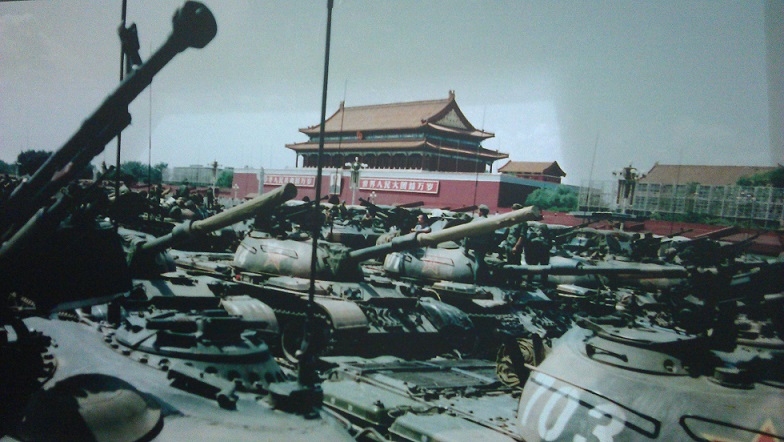
[Note: In 1989, I went into exile in Paris and founded a bimonthly magazine called ‘Democratic China’ at the end of the year. Each issue included a ‘Current Affairs Summary’ for the magazine, and sometimes it was my turn to write. This was an article from the early 1990s, discussing three topics: institutional changes, commercial waves, and power inheritance. After thirty years, state-owned enterprises have been swallowed up by the elite, and the party has chosen a foolish and unruly Xi Jinping. These were two misjudgments I made. But what can you expect from a nation crushed by tanks? Rather, it was something that deserved it. Original Title: Appealing to All Families to Pursue Profit—About a China Hollowed Out. 】
1991 seemed to quietly come to an endamid a wave of confusion following a wave of surprise. The empire that had the most intense impact on the world in the twentieth century seemed to vanish suddenly on a certain morning. Even the United States feels a sense of suddenly losing its opponent and feeling empty. White House spokesperson Fitzwort said, “Within the Soviet Union, things are developing far too quickly.” When Ambassador Strauss returned to China to report on his duties, he expressed concern in a televised interview about a situation where fascists seized power in the Soviet Union; Admiral Jerimai, Vice Chairman of the Joint Chiefs of Staff, is eager to know where those more than 27,000 nuclear weapons have gone. Beck also hurried to Central Asia to find the promise.
Theend of the Cold War doesn’t seem to bring relief, but rather an even more elusive sense of danger. It seems that even Americans’ enthusiasm for Christmas has waned considerably. Merchants are hoping that the most frenzied Christmas shopping frenzy of the year hasn’t arrived, and customers are tightening their wallets, so even President Bush personally shopping at the mall can’t stimulate this weak momentum. Naturally, without a rival, no one had weapons to sell. When Russians had no bread, Americans had to go to supermarkets less.
However, in mainland China, where everyone was most worried about trouble, the city tried to endure the collapse of countless curses and predictions amid the silence and gloom, yet somehow seemed stable, earning huge amounts of foreign exchange. The New York Times said: “This was one of the incredible things of the 1990s: China, led by a stubborn Communist Party, developed at a 6% economic growth rate, had low inflation, rising foreign investment, and record-breaking exports and foreign exchange reserves.” In contrast, a democratic India—another Third World giant in Asia—is struggling with a 4% growth rate, trade deficits, and double-digit inflation. ”
Thus, China once again became a country beyond the common sense of the world, elusive and hard to grasp.
China: The inevitable misfortune has not yet appeared
Foreigners feel as if they can no longer see the anger and frustration of the Chinese people. Christopher, a New York Times correspondent in Beijing, traveled to Guiyang to visit an ordinary worker. Jiang Lianxiang (transliteration), a smiling woman, showed him the sofa, TV, and refrigerator, and said: Most of what you want is already there, except for a video recorder. Worried that buying it will affect the child’s homework. And the family’s monthly salary is only $18. Christopher wrote: “After the military suppressed the pro-democracy movement in Beijing, 1,080 miles away, such an economic sense of satisfaction was unexpected.” Many Chinese people, like foreigners, believe that when tanks crush the students’ tents in Tiananmen Square, the economy will collapse, and this collapse will erupt through declining foreign trade, setbacks in economic reforms, and an increasingly dissatisfied and uncooperative workforce. But none of this happened. ”
Indeed, it seems as if nothing has ever happened in China. Qigong became popular again, even more intense than before June 4th. It is said that there was a school called “Yuanji Gong,” which had tens of millions of followers and became the largest sect in the country. They purchased hundreds of acres of land in certain places and undertook massive construction. Karaoke quickly swept through both urban and rural areas. Guangzhou has sparked a self-funded tourism craze, with 190,000 people already touring Southeast Asia. Shenzhen, on one hand, saw the sex industry booming; on the other, the stock market opened, with 500,000 people rushing to buy. Gambling in the suburbs of Shanghai is fierce—a thousand yuan per bet, ten thousand yuan per night, both officials and commoners alike. Beijing has seen ‘kneeling service,’ and the cultural night market is filled with music and dance. A quiet folk collecting craze also began, with various trinkets from cigarette packs, stamps, chopsticks, keys, and ancient coins to Mao Zedong seals—these small items became treasures sought after and admired by thousands of Chinese people. Even on university campuses, it is common to …… ‘campus agents’ who take on jobs and connect with others.
Everything returned to its original state, much like what Lu Xun wrote back then: after the “revolutionaries” caused trouble, everyone took down their queues again. This face, once again blurred and unable to hide its thoughts, is something the Chinese people themselves are most familiar with. I remember Lin Yutang painted the face of an old woman as early as sixty years ago: “Amidst rebellion and war, surrounded by poor children and grandchildren, cheerful and aged China, leisurely sipping tea and smiling sly at …….”
Who could see through this face?
Of course, various local disturbances, chaos, and even resistance never ceased. According to a recent investigation by Peking University, during last year’s military training at Shijiazhuang Military Academy, two students committed suicide, and more than twenty people suffered from mental disorders; A small group of students burned their uniforms, while others posted notices on campus calling for an end to military training. The CCP also found large numbers of underground labor groups appearing in Beijing and other cities. Several strikes in Beijing were organized by these underground unions. Not long ago, the Ministry of State Security raided fourteen underground trade unions in Beijing and found that two of them were modeled after the Polish Solidarity Union, each with about 100 members. They meet at members’ homes in the form of discussion sessions. They did not openly advocate for overthrowing the Communist Party, only claiming to organize a worker-centered party. According to insiders familiar with the situation, although the Ministry of State Security sent people to infiltrate them, they could not determine who the leader was, as they were extremely cautious and secretive, and secret police had to work hard to secretly gather evidence to prove they were engaged in “counterrevolutionary activities.” This evidence often comes from underground publications.
Additionally, according to observations by The New York Times reporter, the role played by the Department of State Security today is even more mysterious. They believe enemies are everywhere, and their main focus remains on investigating foreign spies and dissidents within mainland China. “There are tens of thousands of public security personnel stationed throughout major cities across the mainland, constantly monitoring political troublemakers, clergy, applicants for overseas migration, and foreigners.” Since 1982, the number of public security personnel in China has surged dramatically, nearly doubling, and many places have established “non-official police” and are equipped with weapons. According to Minister of Public Security Tao Siju’s internal speech in June titled “Anti-Peaceful Evolution,” over the past two years, more than sixty underground “reactionary organizations” have been banned in twelve provinces and cities; In 1990, there were over a thousand cases nationwide involving gun snatching, armed murder, and smuggling of firearms and ammunition, with explosions increasing by 2.7% compared to the previous year. These seemingly invisible undercurrents, along with open robberies on railways and rampant crimes in remote and border areas beyond the reach of government administrative power—such as the Poyang Lake area in Jiangxi, which has become a refuge for major criminal fugitives—all show that China is quietly falling into an even more perilous abyss.
China’s “big trick.”
Such chaos is naturally hard for foreigners to see, and even journalists stationed in Beijing can hardly glimpse a single detail. So, how has Deng Xiaoping managed to hold on until now? This “incredible event of the 1990s” has become a puzzled “big Chinese cat trick” that the whole world can’t figure out. The subtlety lies in various analyses in Chinese discourse, but in short, it boils down to one sentence: save socialism with capitalism. This kind of “wisdom,” which only Chinese people can truly understand and practice, naturally stands out as an outlier beyond common sense, especially in the current global trend of universally condemning communism.
Not long ago, the CCP’s “Eighth National Congress” concluded, and a two-year-long dispute over “capitalist-pro-socialist” was temporarily put to a standstill. Although this seems like a pedantic ideological battle, seemingly a century behind global trends, it is the key to whether the CCP can hold out after June 4th. After the Tiananmen massacre, the issue of whether to maintain or abolish economic reform immediately became the focus of political struggle.
The conservative forces indeed seized the opportunity to counterattack, aiming to sweep away the pattern formed by a decade of reform and reclaim the lost territory of centralization and planned economy. At the height of their power, Chen Yun unleashed a powerful trump card: to blame the massacre and the ten-year reforms that led to the “June Fourth” turmoil, killing two birds with one stone. At the time, although the situation was harsh and harsh at home, the public killing at Tiananmen stirred resentment both inside and outside the court, and calls for accountability kept rising. At that time, Old Deng could only avoid his sharp edge, remain silent, and let Li Peng seize power at will, taking control of the city; When Hu Qiaomu and Deng Liqun were ravaging in the realm of ideology, they pretended not to notice and let Li Ruihuan step in, immediately leading to tension. Old Deng had no choice but to withdraw.
That Jiang core also tried to please both sides, spending his days joking around. Instead, a group of high-ranking officials, relying on their economic strength, dared to stand toe-to-toe with Li Peng and broke out into a “North-South War.” The central government’s tacit approval of local forces thus shaped the pattern. But the CCP regime had not yet managed to hold its ground under the “June 4th” blow. Many people think that the changes in the Soviet Union will accelerate the disintegration of the CCP and the outbreak of domestic crises, but that’s not the case. It was precisely the dramatic miscarriage regime in Moscow and the subsequent complete collapse of the Soviet Communist Party that first stunned the elderly in Zhongnanhai, then opened the “hole.” It has simplified many of the CCP’s problems to the point that it has only one goal: to preserve the country.
In fact, in May and June 1989, the elders’ gang and Deng Xiaoping, faced with the impact of the student movement, once simplified the matter to “preserve the country” and joined forces, collectively deciding to suppress the uprising. But after the crackdown, the old men’s gang settled reform scores with Deng, wanted to follow the “socialist path,” and wanted to replace the Soviet Union as the new leader of international socialism, making the problem even more complicated. Deng Xiaoping’s strengths and weaknesses lay in the fact that he was a seasoned expert at handling problems simply, regardless of the consequences. He is a very thorough realist and utilitarian. However, when it comes to resolving the crisis that is about to capsize, Old Deng does have a solution. Only then did everyone listen attentively to Old Deng’s sharp words: as long as this Party can truly improve living standards, ordinary Chinese people will support the Communist Party’s leadership and not bother with the “June Fourth” turmoil.
Deng Xiaoping became the “chief architect” of peaceful evolution
Thus, before the Eighth Plenary Session, Yang Shangkun, Wang Zhen, and others came forward to call for not interfering with the economic development center; Jiang Xuehe finally gained some courage and dared to personally remove the phrase “capitalist, socialist” from the People’s Daily editorial, and criticized the Central Propaganda Department for making “anti-peaceful evolution” a pretext; Even Chen Yun’s trusted aide Song Ping went so far as to select cadres from the ‘Shanghai faction,’ which seemed to disregard Beijing. Everyone agrees that Old Deng is the one who does the work. Old Deng’s approach was also simple: his old tactic was to use capitalism to save the country (not socialism), although he had to use a trick to prove the superiority of socialism. Since his second rise to power after the Cultural Revolution, he no longer cared whether the country was capitalist or socialist; as long as it was the Communist name, that was enough.
When the Soviet Union first collapsed, Deng made a shocking statement: China is not going to carry the banner of communism; whoever wants to carry it can carry it. We just focus on our own affairs. This is the most “brilliant” aspect of Deng and also China’s biggest “trick.” To quote a common folk phrase “black humor,” it is “Only China can save socialism.” Now, everyone is following Deng’s tone, loudly proclaiming that boosting the economy can prevent peaceful evolution, but little do they realize this is a genuine peaceful evolution.
Attributing the root of today’s political crisis in China solely to the people’s dissatisfaction with material life and economic difficulties was once a consistent approach of Chinese reformers. Back when Hu Qili was in charge of ideology, he complained: Why are people nowadays ‘picking up chopsticks to eat meat, putting down their bowls to curse’? In fact, the modernization processes of many developing countries show that political turmoil often does not occur when governments are unable to escape economic difficulties, but rather amid economic growth and improved living standards. In terms of living standards, before June Fourth, few people admitted they were more comfortable than before. The Zhao Ziyang administration’s emphasis on consumer goods development has already saturated the demand for the “new three major components” (color TV, refrigerator, washing machine) among big city residents. Many such manufacturers have been forced to switch production amid fierce market competition, handing over household appliances to a large number of township enterprises for production, dumping the high energy-consuming and low-quality “three major components” to rural areas.
However, this did not prevent China’s democratic movements from erupting first in major cities, and earlier than in the much worse economic conditions of the Soviet Union and Eastern Europe. At that time, many foreigners were also puzzled. They thought Chinese people lived well, so why would they still have to go against the government? Even now, they would still wonder: how, “when China pursues a tough ideological line, hasn’t it paid a high economic price for it?” ”
Back then, Cixi killed reformists, causing another “boxing uprising,” and she was forced out of Beijing by the Eight-Nation Alliance. After signing the humiliating Boxer Protocol, she also wanted to reform and asked Ronglu what she thought. Rong Lu honestly told her: reforms can save China, but they cannot save the Qing dynasty. However, Cixi still had Zhang Zhidong carry out reforms. Within a few years, the Qing dynasty truly ended. So, the ones who destroyed the Qing were neither Kang and Liang, nor Sun Yat-sen. Half was warlords, half was Cixi herself.
Act without speaking: Separation of governance and system
“If we don’t reform, we’ll die; reform is courting death.” This is the honest truth from ordinary Chinese people.
Deng Xiaoping thought that if they were given a “moderately prosperous” life, they would be submissive. On the surface, everyone lowered their heads and looked obedient, not breathing a word, but whatever they were thinking, everyone understood it without words. To borrow a phrase from a Beijing punk, it goes roughly: Chinese people aren’t even afraid of death, so why fear living?
Nowadays, the way Chinese people live is so unaffordable that both capitalist and social groups can afford it.
If this system is a social system, then forty percent of its tax revenue already comes from individual and collective economies. In the public sector, “undermining socialist support” and harming public interests for personal gain have become the norm; If this system is based on capitalism, it has no property protection, and individuals can still squander their earnings. The simplest “short-term behavior” is “eating,” which is a major cultural feature of China. As the saying goes, “In the time it takes to eat a meal, social wealth is lost; eating is exquisite, picky, and meticulous.” After eating, people joke around, full of humor and skill. “Oral culture” is becoming increasingly developed, so it’s no wonder Wang Meng wrote so elaborately about how to eat breakfast, causing such a huge stir.
In mainland China, ‘social group consumption’ involving public funds for food and drink amounts to 10 billion yuan annually. This means one year of consuming one Daqing oilfield and one-ninth of the internal debt. The government once tried to control public funds for banquets by levying a banquet tax, but restaurants and restaurants certainly didn’t want to block their own income streams. Fortunately, those “social groups” quickly came up with a clever plan: they divided the large banquet tables into smaller tables, counting them by head count to avoid paying taxes, making the dining more refined and refined. Naturally, the cost is even higher. Later, the government switched to an administrative order stipulating that each official meal could only have “four dishes and one soup” per table. This leads to a surprising story.
Thereis a ceramic factory in Handan City, Hebei Province, famous for its clear flower porcelain tableware, which is small, exquisite, translucent, and lustrous, and has always sold well. But somehow, orders suddenly dropped sharply. The factory was bewildered and sent supply and marketing staff nationwide to conduct market research. They realized it was only due to lack of information and lack of timely foresight. They quickly caught up, following other manufacturers’ example, launching a series of giant tableware, with the largest tray capable of holding three fat chickens and a dozen squabs. The originally thin as paper, sound like a plate, and smooth as jade became thick and cumbersome, but sales were outstanding. Major hotels, restaurants, and guesthouses competed to place orders, with monthly sales soaring from 40,000 pieces to 70,000 pieces. In response, the manufacturer jokingly calls it ‘learning to walk in Handan.’ To put it bluntly, this is the tactic by which the “social groups” and the food industry join forces to counter the “four dishes and one soup.”
If people learn that asmall clinic at a central research institute in Beijing purchased 1,200 boxes of Beijing Royal Jelly as an “emergency medicine” for public medical care, that would not be surprising. Then the fact that visiting prostitutes and staying at prostitutes can be reimbursed with public funds is truly an incredible tale. Yet it is a real case. Huang Chongde, director of a sales department at a Guangzhou factory, and three of his subordinates solicited prostitutes and used public funds for “actual reimbursement” for half a year. When the truth came out, he could only sigh at his bad luck. Anyone who can ‘be charming every night’ without spending a single coin is far more than just me. From the coast to the interior, in many places, the sex industry is paid and a hotel accommodation receipt is issued. If you follow the rules and take it back, there’s no need to worry about reimbursement.
Although these cases are small, they show whether China is currently operating a system favoring capitalism or socialism. If, according to the CCP hardliners’ propaganda, Western countries are using every opportunity to promote Western values and lifestyles in order to ‘peacefully evolve’ China’s socialist system, then the material means behind this evolution—economic development, rising consumption levels, and so on—are the fundamental factors behind China’s stability, which Deng Xiaoping has carefully designed. The secret to maintaining this regime for the time being is precisely the secret to completely ruining it. Senior members of the CCP, such as Chen Yun, are not confused on this point. They kept shouting “Beware of Gorbachev-like figures,” and they knew exactly what they meant. And the “miracle” that Westerners cannot see through — the CCP maintaining this regime after June Fourth without collapsing — is actually another “miracle”: the regime survives by sacrificing its socialist principles.
This is the only lesson the Soviet Union’s demise for the Chinese Communists: to separate governance from the system.
Half the territory was ceded to those surnamed Zi
According to Deng Xiaoping’s strategy, this separation was “do without speaking.” Of course, all actions related to maintaining such governance—such as suppressing dissent, banning opposition parties, stabilizing the military, and so on—are all just actions without talk. The so-called “preventing peaceful evolution” is no longer about preventing institutional degeneration in the ideological sense (Mao Zedong nearly destroyed and rebuilt the party for this), but simply about preventing the regime from being taken by anyone outside the Communist Party or even the current ruling party’s interest groups. This is the most fundamental transformation in the history of the Communist Party of China, and the most obvious reflection of its loss of legitimacy in rule.
However, this separation was based on the Communist Party surrendering its “omnipotential” rule model. The first to be given up is naturally the kind of monopoly this party once held by all-people ownership to monopolize the wealth and market of society. Individual and collective economies separated from the old system, with their forty percent tax revenues, became important supporters of this regime and created prosperity and stability.
ANew York Times reporter once interviewed a doctor surnamed Zhang from Guiyang, who trafficked sweaters, Moutai, and chopsticks between Shanghai and the southwest. In 1990, he made a profit of one million, paid 100,000 in taxes, and employed 520 people. He humorously declared, “I am contributing to the country.” People all remember that before June Fourth, Chen Yun once said: According to Marx’s calculated rate of capital exploitation, hiring more than eight people is capitalism. Back then, even rural hired workers were restricted, and now even in the cities, it’s impossible to control them. In fact, China is quietly undergoing a redistribution of ownership, but a distribution without legal protection, which will leave endless troubles just like the Communist Party’s violent redistribution around 1949. Interestingly, it was Chen Yun’s son, Chen Yuan, who seemed to see through the subtlety and recently proposed a “new policy”: since the Communist Party cannot monopolize all social property, it would be better to “legally” convert part of it into “Party property.” This point will be mentioned later.
Instead, the large number of state-owned enterprises that are not owned by anyone and truly belong solely to the Communist Party have now become a burden and unstable factor in society. It has left the government heavily indebted, with annual fiscal subsidies exceeding 100 billion, accounting for 35% of expenditures, and a deficit of 14 billion (including domestic and foreign debt and bank overdrafts, at least 60 billion). The CCP can only borrow domestic and foreign debt and print more money to cover this hole.
Qian Jiaju said: “If factories lose money, the state will take them on; state-owned enterprises are not afraid of bankruptcy. Workers can freely take raw materials and finished products from factories home. This is called treating the factory as home. Even if the factory is taken away, it doesn’t concern the workers—after all, the boss is the People’s Republic of China.” At this Eighth Plenary Session, the Three Gorges case couldn’t be settled, personnel arrangements couldn’t be settled, and in the end, they had no choice but to fight the state-owned enterprises, this “dead tiger,” unaware that this was a monster that could only be fed but not hit. Deng Xiaoping feared it most, and after “June 4th,” he realized that once it was attacked, it would take to the streets demanding “democracy.” Deng Xiaoping had suffered this loss and knew he could only get a share of the spoils, painfully taking hundreds of billions in subsidies every year to buy peace.
But those princelings, full of youthful vigor, refused to accept the wine money and shouted at Old Deng: stop pursuing “arrogant policies,” stop “promising unrealistic high standards to the public,” and even cited a passage from Huntington, saying, “When rulers launch reforms to satisfy the masses’ emotions, they often become the forerunners of revolution, because what the masses think of is not the ruler’s goodwill, but the ruler’s weakness and vulnerability”—the childish part here is that, The Communist Party’s crown princes are even less understanding of their subjects than their fathers. These socialist “masses” are indeed “revolutionary” without support. This is the system — eating from the same pot and making revolutions. These two tempers are developed by the Communist Party. Now, if you want him to change, he must first change your country. This has nothing to do with kindness or weakness. If you want to change him, you must have the courage to risk your kingdom, just like Gorbachev. Unfortunately, the CCP elders and their princelings are no longer such major figures; now, they are willing to sacrifice everything for the country, preferring to let it rot rather than let it go. However, Deng Xiaoping knew that to do so, half the country had to be ceded first—that is, the 40% individuals and collectives who got rich first, and a bit of ‘shared benefits.’
The “Princelings” have committed a major taboo
However, for them, the most difficult issue—the issue of succession—still shows no possibility of resolution.
Before the Eighth Plenary Session, there was a heated debate over personnel arrangements, but in the end, no result was found. It is said that the matter will be resolved at the 14th National Congress. The widespread rumors that reformists and princelings, centered around the Shanghai faction, and other emerging political forces blindly pinned on by overseas hopes might enter the decision-making core ahead of time, seem to be a deliberate illusion. Especially the release of a document known as the Princelings’ “political manifesto” further enhanced the mystery of this illusion. This document, reportedly drafted by Chen Yun’s son Chen Yuan, titled “China’s Practical Response and Strategic Choices After the Soviet Coup,” rejects the CCP’s usual ideological language and adopts certain trendy overseas concepts and terminology such as “neoconservatism,” rationalism, legitimacy, and the creative transformation of traditional culture, giving it a somewhat “nobleman chasing innovation” flavor. The text’s blatant “prince policies” such as “the transformation from a revolutionary party to a ruling party,” the “creative reinterpretation of the second legitimacy source (Chinese characteristics) after the loss of the first legitimacy source (Marxism-Leninism and Maoism),” and “the Communist Party must not only grasp the barrel of a gun but also focus on the property economy,” are indeed a far-from-mature theory and strategy for Deng Xiaoping’s quiet separation of governance and system, which is truly a challenge for these rich kids. However, they broke a major taboo: Deng Xiaoping’s four-character policy: just act, never speak. The princelings are still a bit inexperienced, somewhat clever and not understanding the “not to speak” principle. They grew up immersed in the Communist Party’s conspiracy politics, yet seem not to understand the subtleties within. The only rule within is that there are no rules, and what is said and done are never the same. They think that by picking up a few Western political science terms, they can “enlighten” those who don’t care about legitimacy at all, as if the third generation wants to teach the first generation Communists how to rebuild “legitimacy,” which is a bit too pedantic. This is somewhat like Chiang Ching-kuo’s newly rewritten story about “The Crown Prince Hunts the Tigers in Shanghai” from over forty years ago, or like Lin Liguo organizing a small fleet and writing the “Notes of Project 571” to help his father over twenty years ago, but none succeeded.
Today, it seems quite a few Chinese people are optimistic about this group of princelings, always thinking they are more enlightened than their fathers and that they can easily seize power. In fact, both of these points will become myths. If we talk about ‘enlightenment,’ then the fascist flavor already revealed in the ‘Crown Prince’s political views’ is already obvious. Moreover, these Crown Princes themselves know best that their so-called ‘legitimacy’ in governance is the only one thing: illegally taking over from their fathers. This leaves them with no ‘confidence as rulers’ and can only rely on even more brutal dictatorship. The second related point is that the power transfer model of ‘passing the family business from sons to fathers’ inheritance’ has no ‘legitimacy’ basis even within the Communist Party’s theoretical system. Not to mention that with such an illegal ‘intra-Party legitimacy,’ social legitimacy is inevitable. The political legacy left by Mao Zedong’s ‘Cultural Revolution’ for all people is that no traditional (generally read as ‘feudal’) political practices can be accepted. The current uproar that “the elders of the CCP must hand over their shifts to sons and sons-in-law” is probably a public opinion fabricated by the princelings for themselves. Given Deng Xiaoping’s cunning and scheming, he was not foolish enough to have his descendants buried in his death. Looking at the example of the Chiang family in Taiwan, Chiang Ching-kuo publicly declared before his death that members of the Chiang family would never participate in presidential elections, effectively granting legitimacy to all Kuomintang princes after him to participate in politics. This precedent is a useful reference for politically ambitious CCP princes.
The crisis of power succession has already triggered a political struggle for the power vacuum in the post-elder era of the CCP. This is a source of chaos in the super-economic sphere, with no rules or bottom lines. Any political force finds it extremely difficult to gain legitimacy in today’s China. After the collapse of the Qing dynasty, the phenomenon of a power legitimacy vacuum will reappear in a cycle.
Deng Xiaoping had already lost his chance, and today in China, no one has more opportunities than him. The more he creates a “miracle of stability” today, the more he sows the seeds of future trouble. His utilitarianism, putting pragmatism first, ruthlessness, and only doing without speaking out, seeking power by satisfying the material desires of the Chinese people, appealing to all the people of the world for profit, teaching people everywhere to survive without knowing what it means to be human, and exhausting all the spiritual resources belonging to the Chinese people. During Mao Zedong’s era, Chinese people were the most frenzied political animals, but now, more than ever, they have become economic animals. This would be a deeper destruction for China. Any successor to Deng Xiaoping will be unable to tackle this hollowed-out China.
Reprinted from Su Xiaokang’s Facebook