New York News
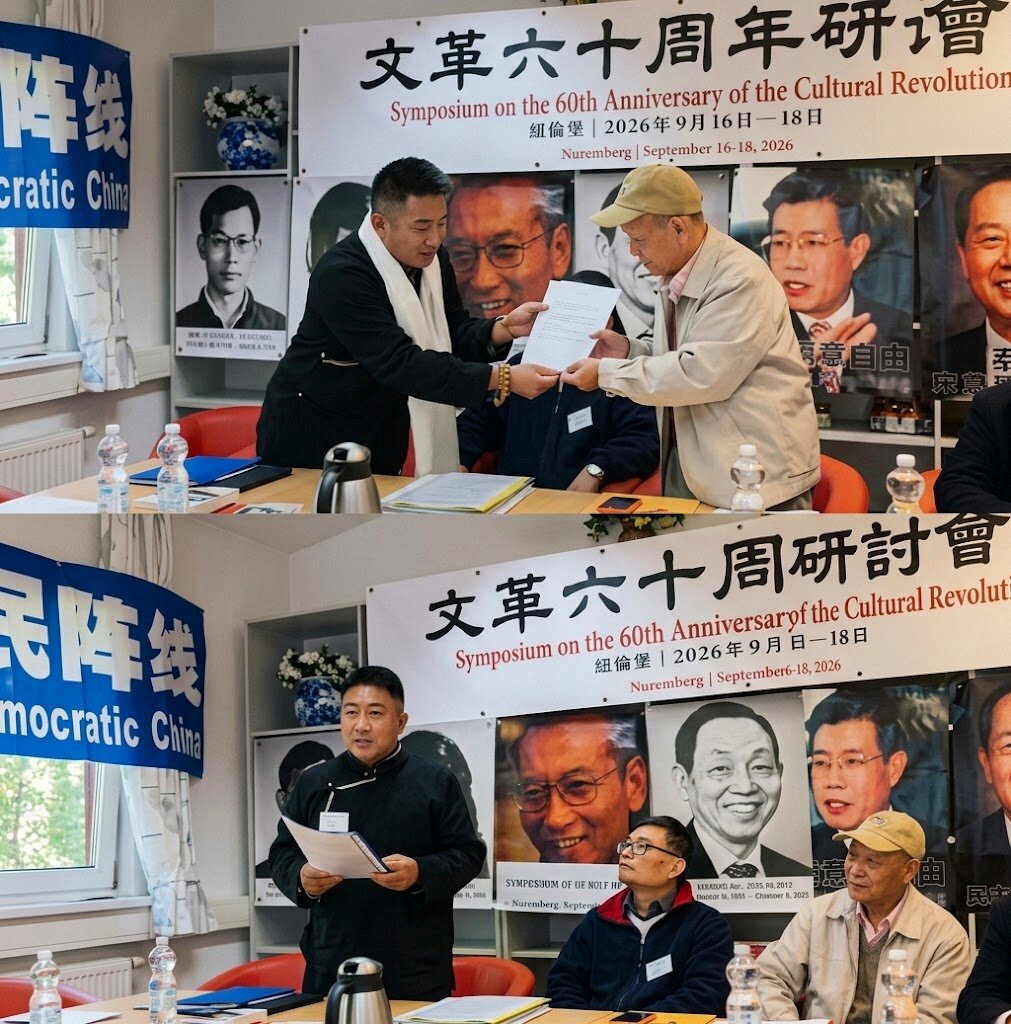
Coinciding with the 60th anniversary of the outbreak of the Cultural Revolution, the “60th Anniversary Seminar” hosted by Beijing Spring magazine was recently held in Nuremberg, Germany. Scholars, writers, media figures, and Chinese democracy activists from Europe, Asia, the Americas, and Australia participated in the event, reviewing the history and impact of the Cultural Revolution from various perspectives such as political systems, historical memory, ethnic issues, culture, and religion.
During the opening of the seminar, participants first observed a moment of silence for the victims of the Cultural Revolution and the June Fourth Incident, as well as for the martyrs of the democratic movement. Yu Dahai Yueyang, president of Beijing Spring magazine, delivered the opening speech.
Tibet’s spiritual leader, the Dalai Lama, specially sent a telegram to the seminar. The message was read at the meeting by Jiang Yangciren, Director of the Chinese Department of the Tibet Administrative Central Committee. In his telegram, the Dalai Lama stated that upon learning that groups such as “Beijing Spring” were holding a seminar commemorating the 60th anniversary of the Cultural Revolution, overseas Chinese democracy activists jointly reviewed the history of the Cultural Revolution, reflected on its lessons and future, and believed such exchanges and reflections were meaningful.
The Dalai Lama’s telegram also gives the commemorative event a broader historical and human rights perspective. The Cultural Revolution not only caused huge upheavals in Chinese mainland society, education, culture, and family life, but its influence also extended to at least several ethnic regions and religious and cultural fields. Therefore, participants’ review of Cultural Revolution history was not limited to the political movement itself, but also touched on issues such as ethnicity, culture, and religion.
During the seminar, many scholars and democracy activists from diverse backgrounds delivered speeches or written speeches. Yan Jiaqi, a Chinese democracy activist, wrote an article titled “The Common Roots of the Cultural Revolution and June 4th,” discussing the connection between the two historical periods from the perspective of political systems and power operations, with Fei Liangyong introducing the article.
Hu Ping, a scholar living in the United States, made a video speech discussing the role and fate of the “Central Cultural Revolution” during the Cultural Revolution, and re-examining the history of the formation, operation, and eventual dissolution of the Central Cultural Revolution Group during the Cultural Revolution.
German sinologist Thomas Weyrauch, in his essay “Germans and the Cultural Revolution,” introduced the impact of the Cultural Revolution on West German society, especially among radical leftist groups, and reviewed the historical phenomenon of some German Maoists influenced by Chinese official propaganda and developed idealized views of Mao Zedong and the Cultural Revolution.
Professor Li Youtan from Taiwan discussed the transformation of China’s political system based on the Cultural Revolution experience. Other speakers also covered topics such as the political transformation experiences of the Soviet Union and Russia, major engineering disasters and institutional responsibilities, educated youth going to the countryside during the Cultural Revolution, and the “Inner People’s Party” case in Inner Mongolia.
Wang Longmeng, living in France, as a descendant of the Mongolian ethnicity, recalled the “Inner People’s Party” case in Inner Mongolia during the Cultural Revolution, discussing the history and long-term impact of persecution suffered by large numbers of Mongol and Han people during political movements. Some participants discussed the trauma and historical memory left by the Cultural Revolution for a generation, starting from personal memories and family experiences.
In addition to keynote speeches, the seminar also featured documentary screenings, free discussions, literary readings, candlelight commemorations, and activities to commemorate the Cultural Revolution, June Fourth victims, and the martyrs of the democratic movement. During the event, all attendees also went to St. Lawrence Cathedral in Nuremberg. Lorenz Kirche), holding a photo exhibition commemorating the 60th anniversary of the Cultural Revolution. By publicly displaying historical images and documents, more overseas people can learn about the historical background of the Cultural Revolution and its long-term impact on Chinese society.
Seminars, photo exhibitions, documentary screenings, and candlelight commemorations are interconnected, making this 60th anniversary celebration not only include academic and historical discussions but also public displays and commemorations of historical memories. Participants from different countries and regions shared their experiences and research during the event, re-examining this major historical movement that began 60 years ago from various perspectives.
“Beijing Spring” magazine website:beijingspring.com

Reprint source:Original report by World News Network