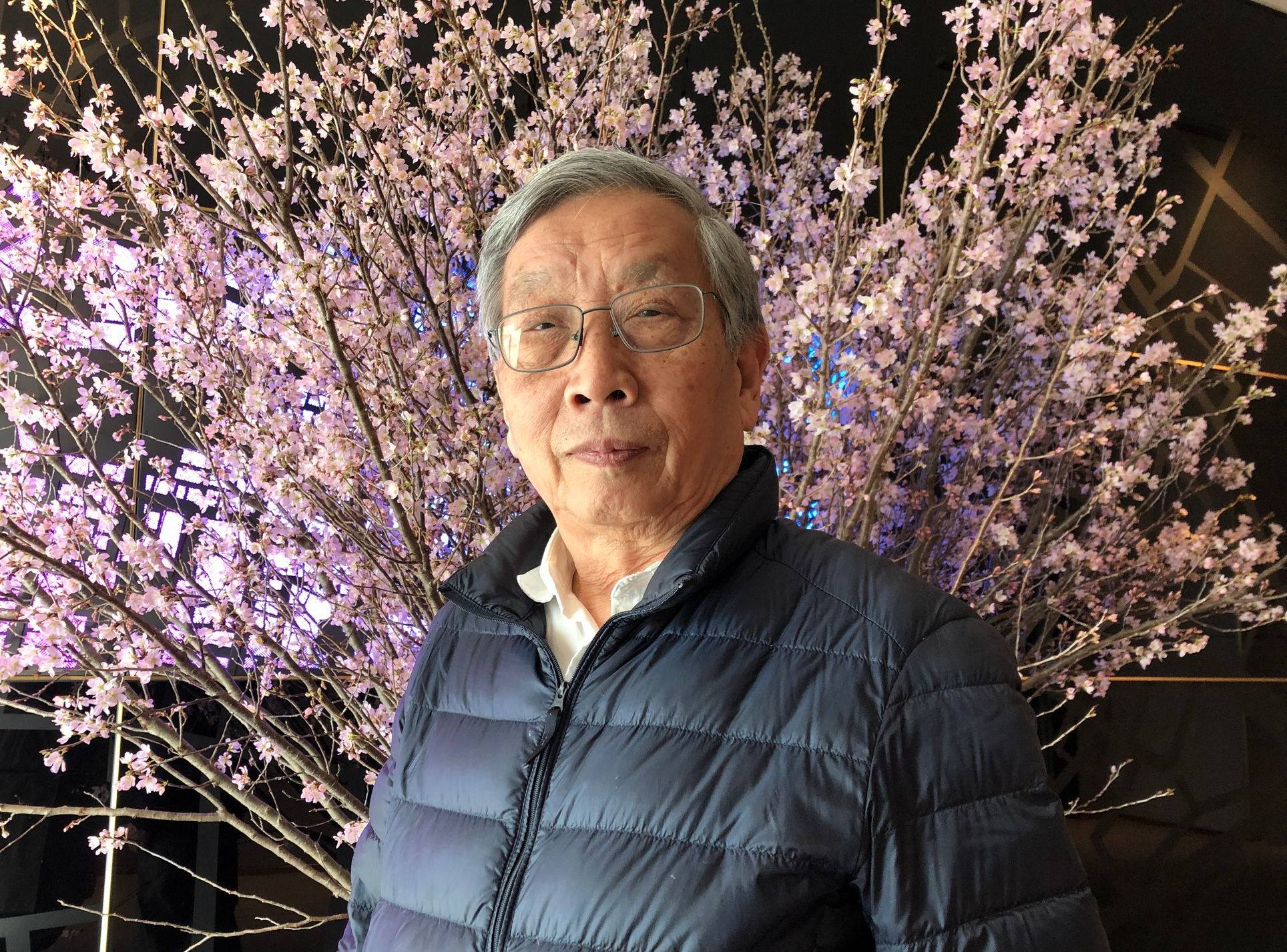
Old Wan passed away with great sorrow. Reaffix the old text, respectfully expressing condolences.
Blood must be hot, mind must be cold, bones must be strong—I recommend Wan Runnan’s memoir, ‘Cloud Sails in the Business Sea—Stories of Four Connections.’
Hu was pacified
February 25, 2014
I once said: The most valuable words our generation can leave behind are probably autobiographies, memoirs.
Around 2006, Wan Runnan—whom we all call Old Wan—began publishing his memoirs online. It is divided into several sections by time period, including “Childhood Memories,” “Middle School Years,” “Tsinghua Years,” “Sitong Stories,” and “My 1989”; According to Lao Wan, he also had to write “Exile Life.” In Lao Wan’s own words, this “can be considered an explanation for his entire life.”
Last June, Hong Kong’s Tianyu Publishing House published his “Sails of Business Sea,” subtitled “Stories of Sitong.” In fact, this book includes not only “Stories of Sitong” but also “My 1989.”
Undoubtedly, founding Sitong and participating in Bajiu were the two most brilliant and brilliant experiences in Lao Wan’s life. These two experiences have already been recorded in the history books. Now we can see the stories of those involved, which is naturally extraordinary.
Sitong was founded in 1984 and was the most successful private enterprise in China during the 1980s. In the year Sitong was founded, sales were 9.8 million yuan, and by 1988, it had reached 1 billion yuan. According to the 1988 national information industry rankings, Sitong ranked first, with Sitong alone accounting for one-third of the top ten companies’ sales. Now a well-known company, Lenovo recently acquired Motorola, ranking eighth at the time, with sales of 140 million yuan. Among the leadership of Sitong before and after, there were many who were criticized and criticized, but only Lao Wan received widespread praise and respect. This is not only success in doing things, but also in being a good person.
Not long after Sitong was founded, there was a family upheaval. Someone wanted to start anew, took a group of people away, and took away a lot of business. Following the principle of ‘a gentleman never speaks ill of others,’ Lao Wan parted ways amicably with the one who left, preferring to suffer silent losses in business rather than be harsh with them. Another subordinate committed financial fraud, but fortunately it was discovered in time and no actual loss occurred. Many people in the company advocated prosecuting the perpetrator and sending him to prison, but Lao Wan refused, fearing that doing so would ruin the young man’s entire life. For colleagues, partners, and subordinates from back then, Lao Wan always spoke kindly, at least never harsh or harsh words. Even if this wasn’t entirely out of temperament, it was also due to upbringing.
During the eighth and ninth years, Lao Wan did two things. One was an attempt to facilitate an emergency meeting of the NPC Standing Committee to resolve the political crisis at the time; The other was an attempt to persuade students to leave the square at the right time. Both in principle and strategy, both were done correctly, but unfortunately, neither succeeded. Especially persuading students to leave the square in a timely manner, there were nearly successful more than one occasion, but still failed, leaving a lasting regret.
Lao Wan believes my strategy of “seize when it goes bad, exit when it hits” is not feasible. “Because in reality, when they see ‘bad,’ someone steps in, but when they see ‘good,’ they not only refuse to accept it, but instead intensify and rush in.” But Lao Wan himself emphasized that lessons should be learned from the tragedy of 1989, and the most important lesson is: don’t corner the other side, be willing to compromise, and let the reformists within the party win once. Isn’t this exactly what I mean?
Some say that during the 1989 storm, Wan Runnan was “overthinking,” “misjudging the situation,” “ambitious,” and “political opportunism.” Lao Wan just smiled it off. Old Wan said, “Everyone has a hurdle in their heart, and I can’t get past it.” In fact, the 1989 pro-democracy movement was not only the largest democratic movement in China, but also in world history. It was after the authorities declared martial law on May 19 that participation from all walks of life across the country, as well as overseas students and Chinese from various backgrounds, reached its peak. In human history, you won’t find a second thing like China’s 1989 pro-democracy movement that won overwhelming global support. Therefore, now it’s not about asking why Lao Wan and we participated back then, but rather asking those who mocked and ridiculed Lao Wan why you didn’t participate back then. In fact, most of those who mock Lao Wan today actually participated back then; Therefore, those who mock Lao Wan for betting on the wrong treasure are probably just spitting in their own face.
Since exile abroad during June Fourth, Lao Wan has never returned to China. Many friends tried to help arrange for him to return, but it was just to admit fault and say a few soft words. Lao Wan made it very clear: “I won’t say things that go against my heart.” At this age, I don’t want to compromise myself anymore. “This statement sounds calm, yet very firm.” Old Wan usually gives speeches or writes articles without such grandiose speeches—except for poetry. On his sixtieth birthday, Lao Wan wrote a poem titled “Sixty Expressing Feelings”: “The principles of rise and fall throughout history are the same; Heaven’s will is entirely in the hearts of the people.” Yet I follow Xiang Yu in learning among outstanding men, yet in Jiangdong, I am a hero among ghosts. “Reading this poem and Lao Wan’s others, you can understand that besides being gentle and easygoing, Lao Wan was also passionate and passionate.
Lao Wan mentioned several times in his book that the heart must be warm, the mind cool, and the bones strong. I think this is both his personal expectation and his expectation for us readers.
Source: Hu Ping’s Facebook